After 31 years of bonsai styling, teaching, and judging numerous New Talent competitions, I’ve noticed that newcomers often struggle not with creativity, but with preparation and process. A clear, disciplined approach can dramatically improve results—especially under the pressure of a timed event. I developed the following checklist from my own experience, including the method I relied on when I won the inaugural 2002 American Bonsai Society New Talent Competition. My goal is to share these insights so new competitors for the upcoming BSOB styling completion in December 2025 can avoid common pitfalls, showcase their skills confidently, and enjoy the challenge of shaping a tree under competition conditions.
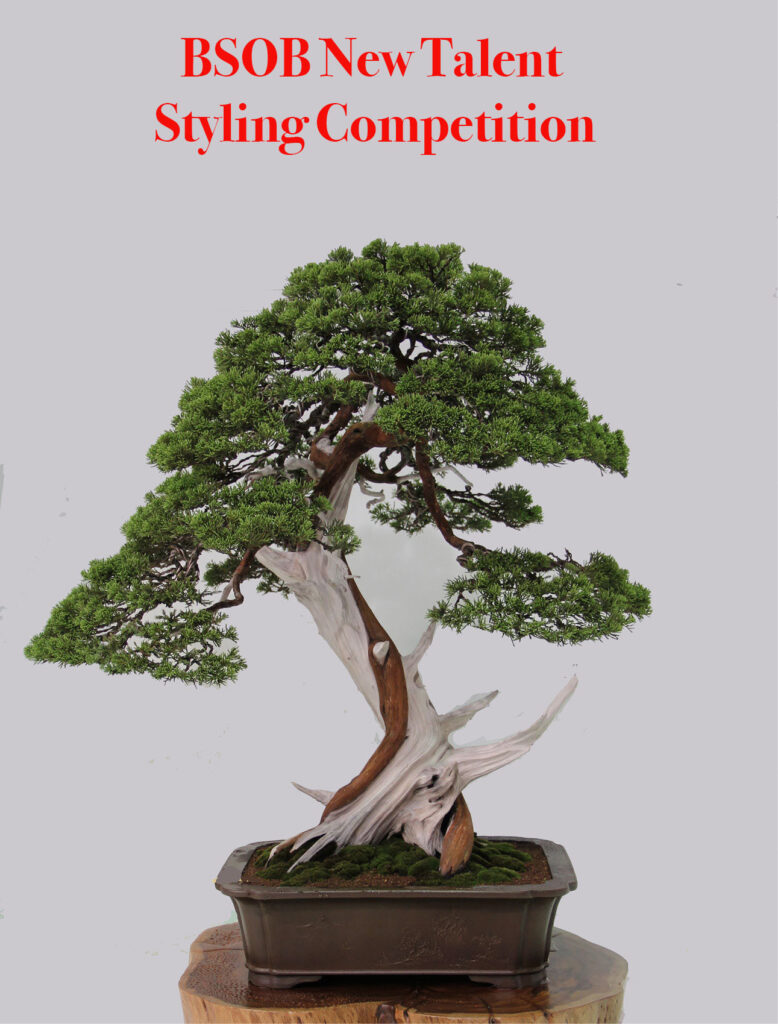
And don’t expect to create a tree like the cover image above. Read below to tackle the realm of the possible.
1. Preparation Before the Event
A. Skill & Knowledge Building
- Practice wiring regularly (both single and multiple wiring; practice on various branch thicknesses).
- Study classic and modern bonsai styles from respected artists.
- Study tree species characteristics (growth patterns, bending limits, foliage habits. BSOB will offer Juniper Parsonii for the competition).
- Review fundamental design principles (front selection, taper, negative space, movement, primary-secondary-tertiary structure).
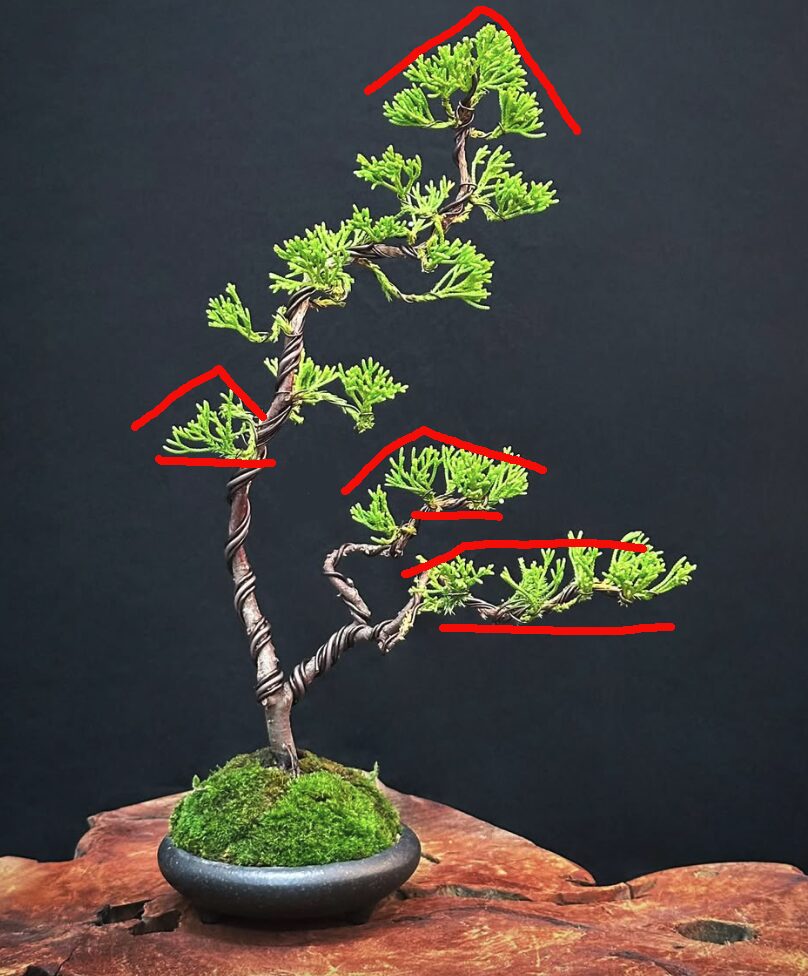
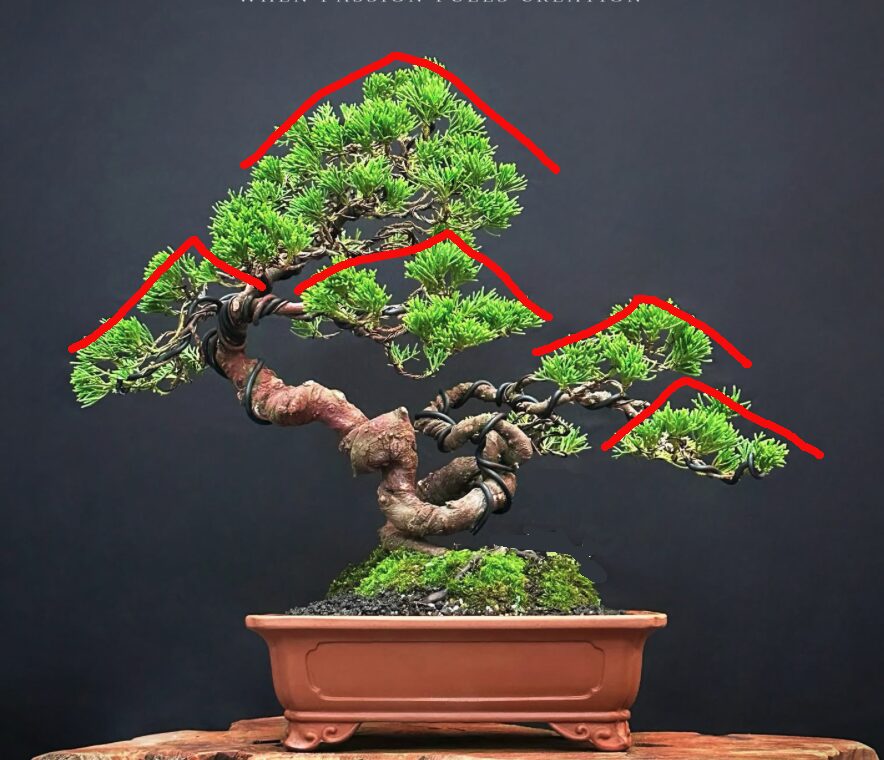
- Practice creating branch pads that look triangular from both the side and the top.
- Study good examples of dramatic but simple competition designs to understand time-based decision-making.
B. Tools & Equipment
- Clean and sharpen all tools (shears, branch cutters, knob cutters, detail scissors, grafting knife).
- Prepare carving tools (Dremel, Makita, hand gouges)
- Bring raffia for heavy bends (pre-soak if needed).
- Bring fresh copper wire in multiple gauges (stronger than aluminum, especially important for competition bends).
- Bring wedges and shims for altering planting angle.
- Bring jin pliers and wire cutters.
- Bring portable turntable (sturdy, smooth, stable).
- Bring root hook and chopsticks for root examination (repotting is usually not allowed.)
- Bring brushes and cloths for cleaning trunk and deadwood.
- Bring spray bottle to prevent foliage drying.
- Bring zip ties, guy wires, or tension tools if permitted by rules.
- Bring spare potting soil / substrate for angle changes require surface adjustments.
- Pack a small first aid kit and safety gloves (cuts happen often).
C. Mental Preparation
- Review competition rules (tools allowed, time limit, material restrictions).
- Set a strategy for design under time pressure (dramatic + simple = effective).
- Prepare a plan for quickly assessing a tree on the day of competition.
- Remind yourself: goal is to create the best possible framework, not a finished bonsai.
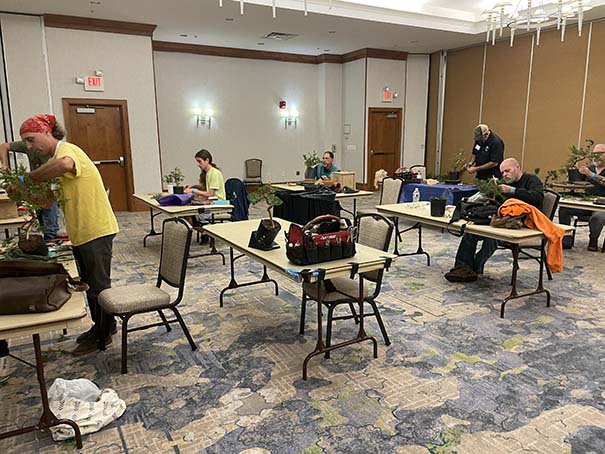
2. During the Competition
A. Strategic Approach
- Work alone — no external help (rules typically require this).
- Use all the time allowed — pace yourself.
- Study the tree from all angles before touching it (360° inspection).
- Examine roots carefully — match roots + trunk line to determine the best front.
- Choose a front early and mark it with a wire tag or wooden stick.
- Consider a new planting angle — dramatic shifts improve most raw material.
- Use wedges to prop the tree at candidate angles before committing.
- Commit to a design before cutting heavily.
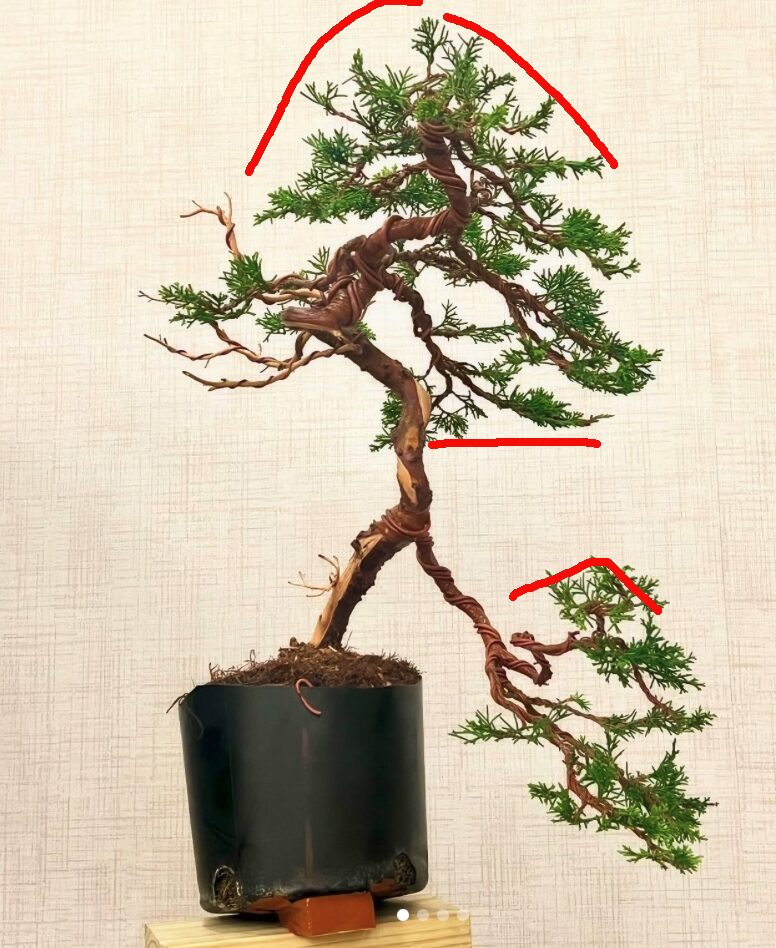
B. Designing
- Aim for a dramatic, simple design (competition time is limited; avoid overly complex structures).
- Avoid windswept style (it’s too difficult to execute convincingly under time pressure).
- Preserve enough foliage — don’t thin to the point the tree looks sparse.
- Select branches for left-right-back structure to show classical fundamentals.
- Look for branches to convert to some dead branches (jins) — when removing a branch don’t remove all of it. Leave a stub and skin the bark. Then shape the dead tips to look natural. i.e. remove the hand of man).
- Create negative space intentionally between foliage pads. Spacing between pads gets smaller near the top of the tree.
- Avoid bar-branches and crotch clutter by removing duplicates early. (For non-competition you might keep crotch foliage to create a new branch but for a competition remove them).
C. Execution / Technique (you might want to review Chapter 8 of my book, “Introduction to Bonsai” https://www.amazon.com/Introduction-Bonsai-Growing-Appreciating-Across/dp/1098773462)
- Clean the trunk of dirt and debris to reveal structure.
- Wire every branch to show full command of technique (judges notice this).
- Don’t cross wire and use appropriate wire for branch size.
- If wire gets too heavy for branch switch to smaller gauge wire to go out to the tips but overlap at least two parallel turns between the two wire sizes.
- Never have more than three parallel pieces of wire on piece of branch.
- Wire tightly with no air gaps.
- Use copper wire for strong structural bends; and finer wire for detail work.
- Bend the tips of the foliage pads up to see a bit of branch structure underneath.
- Build 3D foliage pads (triangular from top and side and more or less flat on the bottom).
- Remove any foliage growing straight down or up or wire that foliage to make the pad volume.
- Protect major bends with raffia (shows advanced technique).
- Use carving tools to create dead branches and scars (jin/shari) or refine existing deadwood. remove all tool marks. However don’t go crazy with the dead branches. Use them to create contrast and help tell a story.
- Use fire to remove carved wood fuzz off branches and help alter the carved surfaces. I use a propane torch. (Judges will like this step).
- Use guy wires for precise directional movement if beneficial but minimize guy wires as they can detract for good branch wiring.
- Shape apex carefully — avoid over-thinning; target a soft dome / pincushion shape if possible. Avoid just a stick apex.
- Check balance and movement continually from the chosen front.
D. Final Presentation
- Confirm planting angle is correct and secure with wedges if necessary.
- Remove wire ends cleanly; no sharp stubs and wrap end around tip to secure it.
- Brush soil surface smooth for a clean look.
- Wipe tools and bench area (judges notice neatness).
- Do a final 360° check for wire crossing, uneven pads, or accidental cuts.
3. After the Competition
(Optional but useful)
- Photograph the tree for comparison and growth plan.
- Ask judges or experienced artists for critique.
- Reflect on time management and where you felt rushed or stuck.
- Practice weaknesses before the next event.
Good Luck and Do Well.