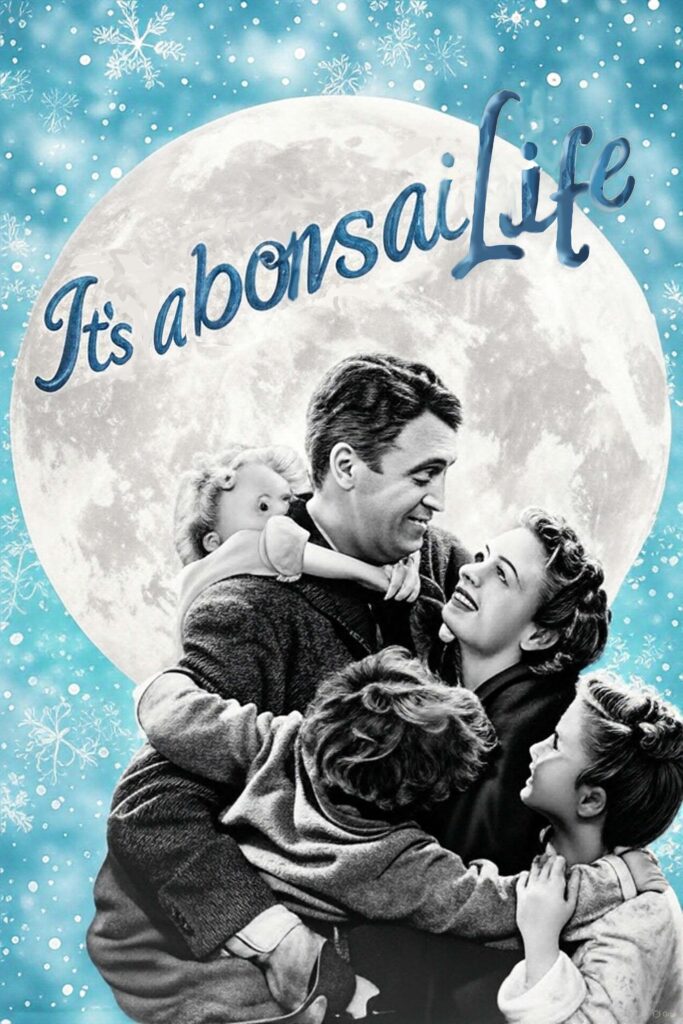
In the sleepy town of Melbourne Palms, George Pruner ran Bailey’s Bonsai Emporium, the only place within fifty miles where one could buy a century-old buttonwood the size of a small gator. George could turn any scraggly premna cutting into a masterpiece of twisted grace, and the BSOB members snatched them up. His wife Mary loved him in spite of his bonsai devotion, and their four kids—Zuzu, Tommy, Janie, and Pete—grew up surrounded by tiny forests in shallow pots.
Life was good until Christmas Eve, when everything went wrong at once. Greedy Mr. Potter, the banker who hated anything that couldn’t be repossessed, decided to foreclose on the Emporium. Uncle Billy had lost an $8,000 deposit (it later turned up in a bag of akadama), and George’s prized 200-year-old pine was dying from saltwater intrusion. Desperate and drunk on despair, George staggered to the Pineda causeway bridge and shouted into the windy night, “I wish I’d never been born!”
Splash. A plump bonsai flailed in the chilly Indian River below. George dove in and hauled it out.
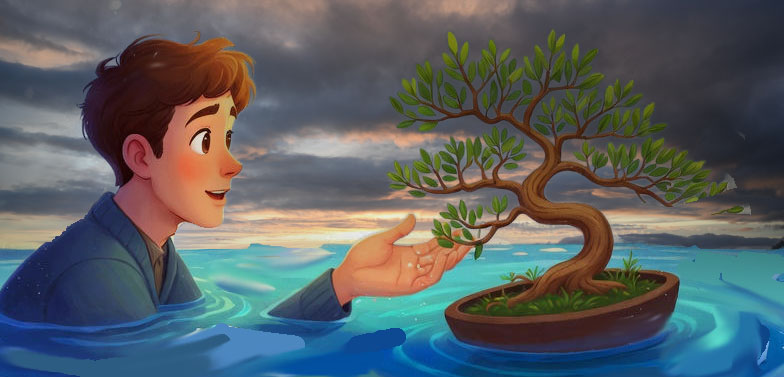
The soggy stranger wrung out his winged branches—well, the places winged branches would go if he’d earned them yet. “Name’s Ulmus Alta, Bonsai Angel Second Class. You got your wish, George. You were never born. Let’s take a walk.”
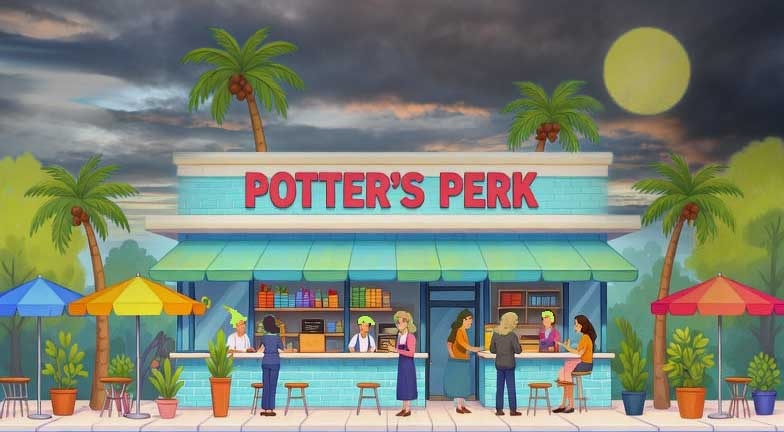
Melbourne Palms without George Pruner was a nightmare in commercial neon green. Potter had paved paradise and installed a parking lot surrounded by plastic palms. The Emporium was now “Potter’s Perk,” a soulless coffee chain with baristas with green hair and multiple plural pronouns. Mary, unmarried and severe, worked the library desk surrounded by silk elm trees. She flinched at real leaves; they reminded her of a dance she never attended, a boy she never met.
The kids didn’t exist. Zuzu’s bald cypress bonsai were never collected, Tommy never stabbed himself with a grafting knife, Janie never bare rooted an Ilex Yaupon, and Pete never learned proper branch wiring. Grill’s bar served cocktails called “Leafless and Lonely.” Rockledge Gardens ran a malsai cartel. Old Man Gower was in bonsai prison for breaking a bonsai rule decades ago—no young George to select a new front for the tree that day.
Worst of all, no one in town understood defoliation or clip and grow anymore. Children stared at screens instead of wiring branches. The annual Bonsai Show at the Zoo was replaced by a Black Friday sale on artificial hedges.
George dropped to his knees in the Melbourne Palms Mall parking lot. “Enough! I want my life back—root rot and all!”
Ulmus Alta grinned. “Attaboy.”
Snap.
George was back on the Pineda bridge, soaked but alive. He sprinted home past Wawa, bursting through the door shouting “Merry Christmas!” like a madman. Mary and the kids swarmed him. Friends poured in bearing soil, pots, and—miraculously—the missing $8,000, recovered from Uncle Billy’s akadama by the world’s most civic-minded raccoon.
The parlor filled with laughter and the scent of pine. Someone hung a tiny bell on the bonsai Christmas tree. It tinkled.
Zuzu looked up, willow leaf cuttings in her hair. “Teacher says every time a bell rings, an angel gets his wings.”
George hugged her tight. “And every time a bonsai buds, a man remembers his life is wonderful.”
Mr. Potter slunk away, defeated by the unstoppable force of community and chlorophyll. Ulmus Alta finally earned his wings—delicate, translucent, shaped exactly like sea hibiscus leaves. (oops).
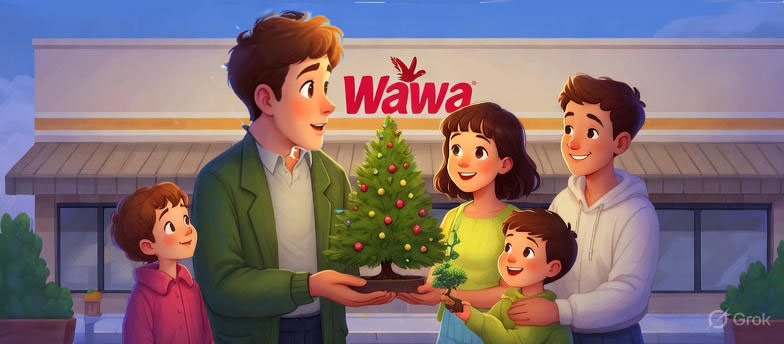
Years later, the Emporium thrived. George taught the world that the greatest trees start small, that every careful cut can lead to beauty, and that no man is a failure who has friends, family, and at least one stubborn pine that refuses to die.
In Melbourne Palms, the bonsai never stopped growing, and neither did the love.