Recently, some USA bonsai show organizers have questioned the inclusion of judging in bonsai exhibitions. This raises the fundamental question of what bonsai represents. If seen as a craft—like competitive barbecue cooking or high school science projects—judging seems essential. However, if bonsai is viewed as an art expressing emotion and personal vision, then judging becomes problematic. Rankings and awards risk misunderstanding the essence of bonsai, which, at its core, is a conversation, not a competition.

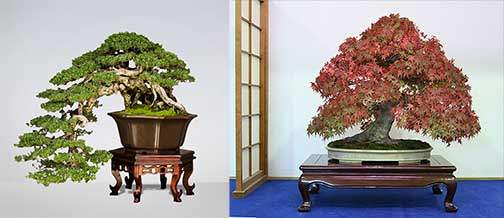
Unlike competitive fields with clear criteria—taste or technical accuracy—bonsai exists in a subjective realm. A displayed tree transcends mere horticulture; it is a composition designed to evoke mood and emotion. The Japanese tokonoma display niche illustrates this, yet Western displays can tell stories, transforming bonsai into an emotional medium. Thus, how can one person’s emotional response be ranked above another’s? What makes one interpretation “better”?

Judging art has always been contentious. While shaping skills can be assessed, the true essence of art lies in its emotional impact, which is inherently personal. Bonsai further complicates this, as traditional guidelines—about proportion, balance, and form—often create confusion with objective standards. These guidelines are visual languages, not scoring rubrics. When judging systems prioritize adherence to these conventions over expressive power, bonsai risks being reduced to formulaic templates.
Advocates for judging argue that it serves an educational purpose, highlighting exemplary work for others to emulate. However, in practice, the feedback from judges is often minimal and shallow. An award alone does not explain a tree’s artistic success; it merely reflects one person’s opinion. Without substantial feedback and dialogue, judging becomes more ceremonial than educational.
Additionally, judging can promote conformity. When certain styles and forms are rewarded, they become entrenched, leading to predictability and stifling creativity – the dreaded helmet on a stick. Practitioners may replicate winning styles instead of exploring diverse possibilities, thereby narrowing the art form.
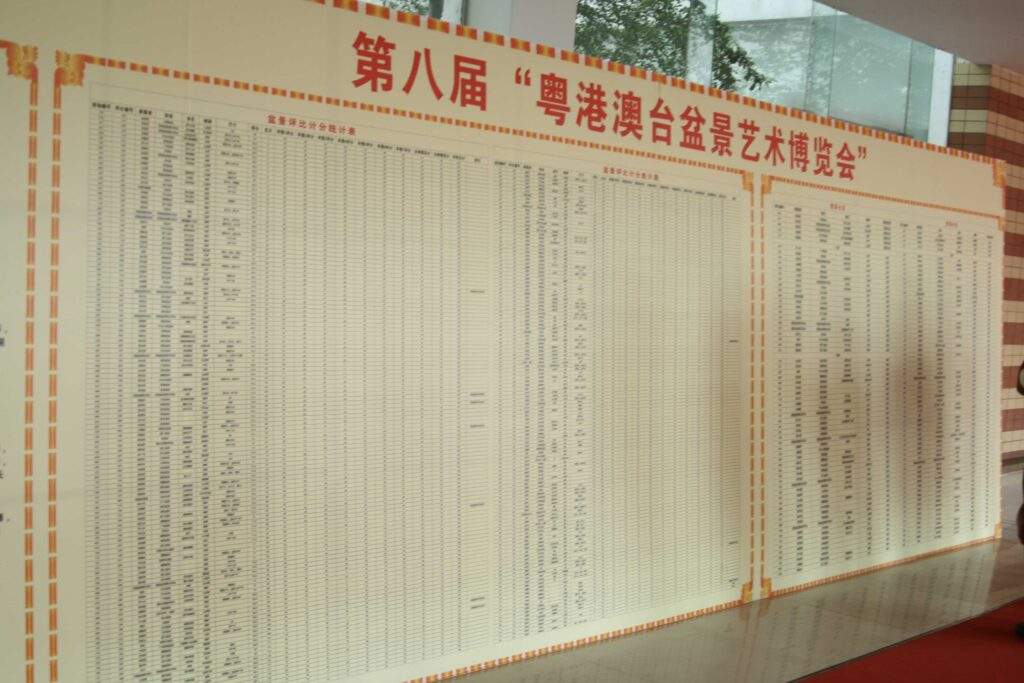
Another critical issue with judging is the influence of personal relationships and politics. Impartiality is hard to achieve within a small bonsai community where judges may know the artists personally. This can lead to biases influencing decisions and perceptions of favoritism. Additionally, the phenomenon of “checkbook bonsai” arises when individuals with financial means rely on professionals for importing trees, and preparing exhibition-ready trees, creating an uneven playing field. This can disadvantage those developing their trees independently and lead to the Kentucky Derby of bonsai.
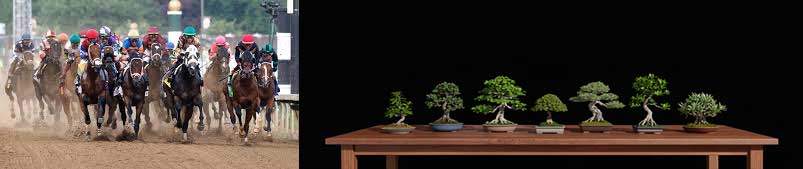
Judging can inadvertently reinforce inequalities and shift the focus from personal engagement with art to the pursuit of accolades, distorting artistic intent. Success should be defined by the impact of a display and the conversations it ignites, rather than awards.
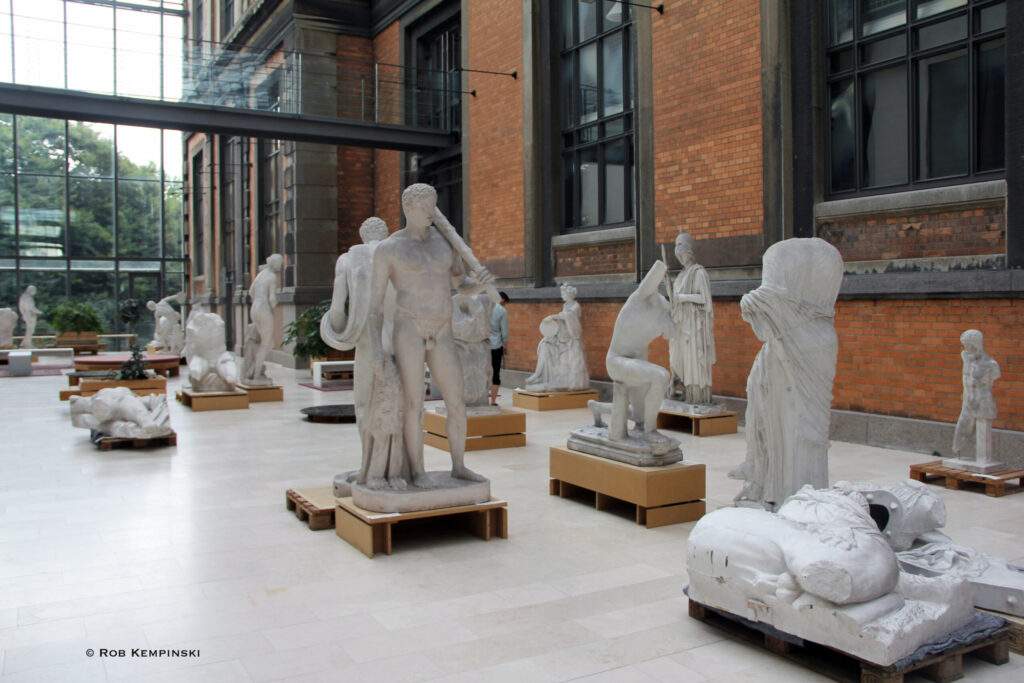
This situation contrasts sharply with how art is presented in museums, where works are not ranked. Museums curate and invite engagement, celebrating the experience over imposed hierarchies. Bonsai exhibitions could benefit from a similar approach, focusing on appreciation rather than competition. In this model, education could take the form of discussions, allowing participants to deepen their understanding of bonsai.
Whether bonsai should be judged is a philosophical question, asking us to reflect on our vision for bonsai as a living art form that evolves and inspires. Moving away from judging toward appreciation allows artists to explore new techniques, engage viewers, and value trees based on the stories they tell and the emotions they evoke. In this way, bonsai can flourish as art rather than competition.