In all my travels, I’ve seen an extraordinary number of bonsai trees around the world—and I’ve managed to photograph many of them, though not always under studio conditions. As a result, I now have more than 40,000 images of bonsai on my hard drive.
Recently, while cleaning up that digital mountain, I found myself wondering: what are the ten bonsai that truly stayed with me? Not just great trees, but trees I saw in person, photographed myself, and still remember clearly years later. I sat back and reflected on which ones stood out most in my memory—then checked to see if I actually had photos of them.
I excluded any of my own trees. What follows, then, is my personal Top 10 Favorite Bonsai that I have seen and photographed.
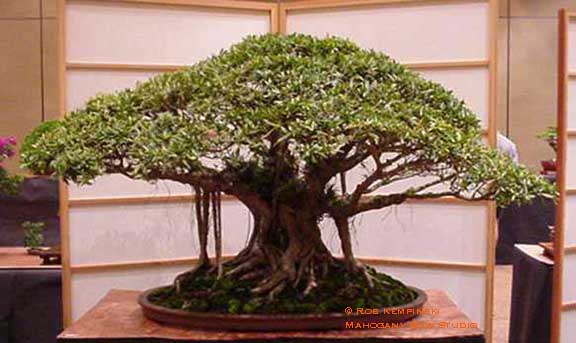
1. Banyan Willow Leaf Fig – Jim Smith, Vero Beach, Florida, USA
I’ll start close to home with this incredible banyan-style Willow Leaf fig (Ficus salicaria) by the late Jim Smith. I believe the tree is now in South America. Not only is this tree an outstanding design, it blazed a trail for ficus bonsai in the U.S.—and perhaps worldwide—at a time when banyan-style bonsai were almost unheard of. Jim was also a major influence on my own bonsai journey, so it’s only fitting that his tree holds the number one spot.
2. Shimpaku “Shoten no Ryu” – Takeyama nursery Fuyo-en, Japan
I first saw this tree in 2000 when Dave Williams and I toured Japan. This Shimpaku juniper, (Juniperus chinensis shimpaku) Shoten no Ryu (“The Dragon Rising to the Sky”), is held by Takayama-san and displayed at Fuyo-en in Omiya. The spiraling deadwood absolutely stunned me. Despite searching for more than 26 years, I’ve never found material that could truly emulate this design.
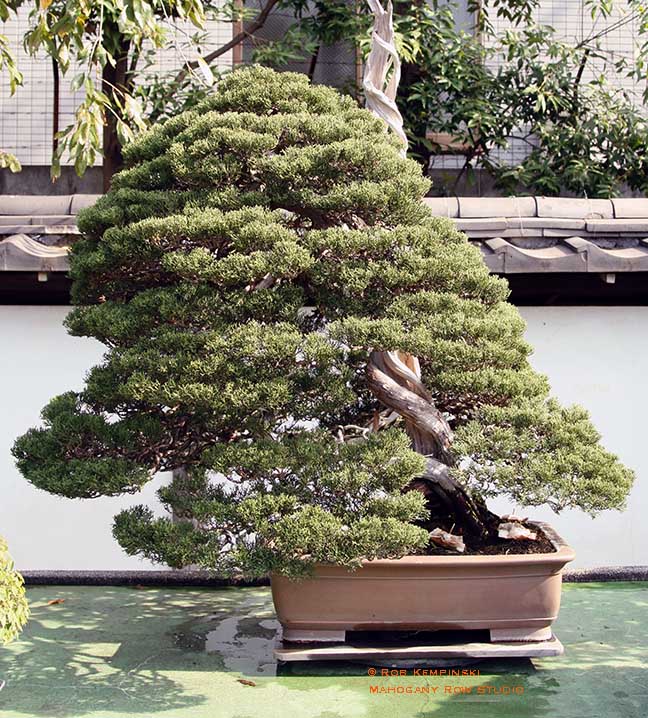
3. Slanting Slab Hinoki Cypress – Masahiko Kimura, Omiya Japan
Staying in Japan for number three: a slanting slab with Hinoki Cypress (Chamaecyparis obtuse) by Masahiko Kimura. What began as fairly nondescript material was transformed through an innovative slab planting that became world famous. Interestingly, the slab itself is man-made from reinforced fondue cement. Kimura-san has made several like this, but this one remains my favorite.
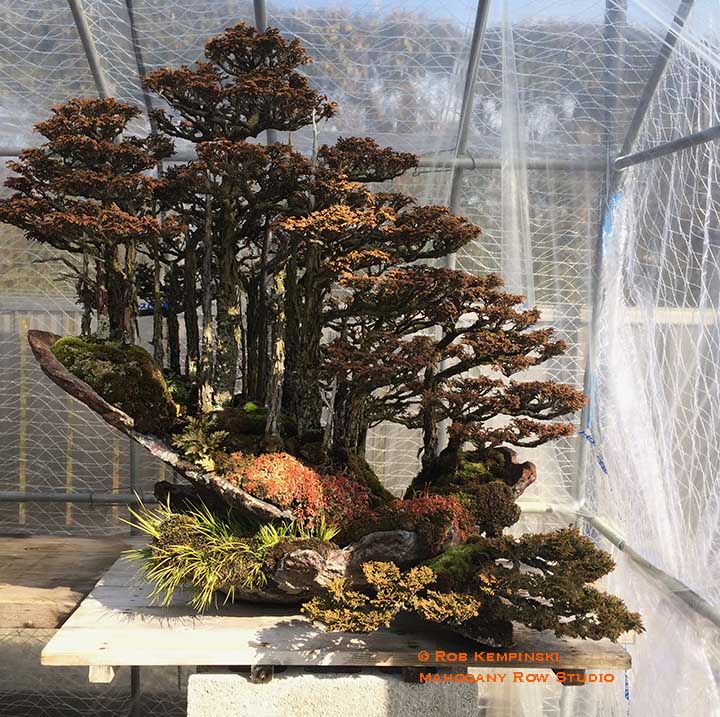
4. Weeping Willow – Simon Temblett, UK
Let’s jump over to England. This weeping willow (Salix matsudana ‘Golden Curls’) bonsai was created by Simon Temblett and displayed at the Noelanders Trophy in Belgium. The design, color, movement, and pot come together perfectly, making this tree instantly memorable and firmly in my top ten.
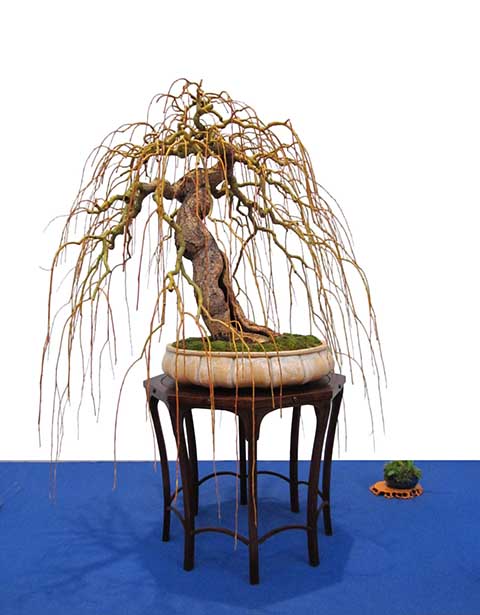
5. Headache Tree– Artist unknown, Indonesia
While we’re on island nations, here’s a Headache tree (Premna obtusifolia) from Indonesia. I don’t know the artist or owner, but the tree left a strong impression. The dramatic contrast between the pale, intricate deadwood and the lush green foliage gives the illusion of a very old tree with a partially “gone” trunk. Headache trees are one of my favorite species for bonsai so I knew one had to go in my top 10. The rare and superb use of deadwood here makes this one exceptional.
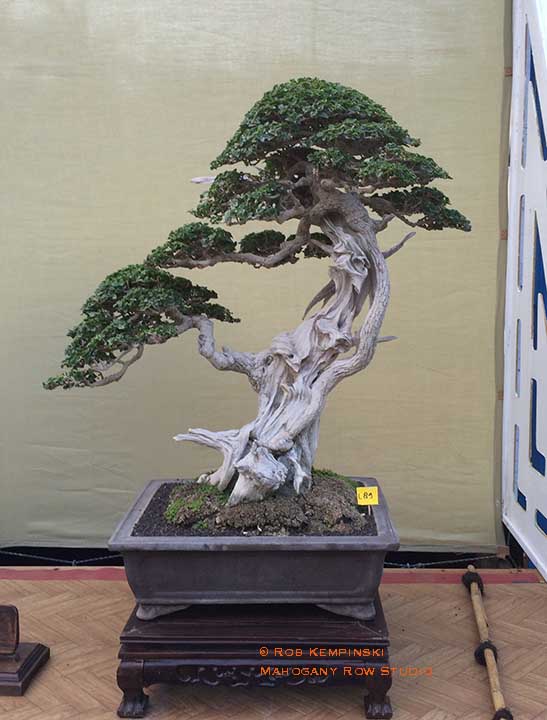
6. Hackberry – Artist unknown, Taiwan
For number six we head to Taiwan. This hackberry (Celtis occidentalis) may not be large, but it represents a beautiful fusion of Taiwanese and Japanese aesthetics, with a touch of lingnan influence. I awarded this tree when judging it about 15 years ago. I don’t recall the artist or owner, but the image of this tree is permanently burned into my memory.
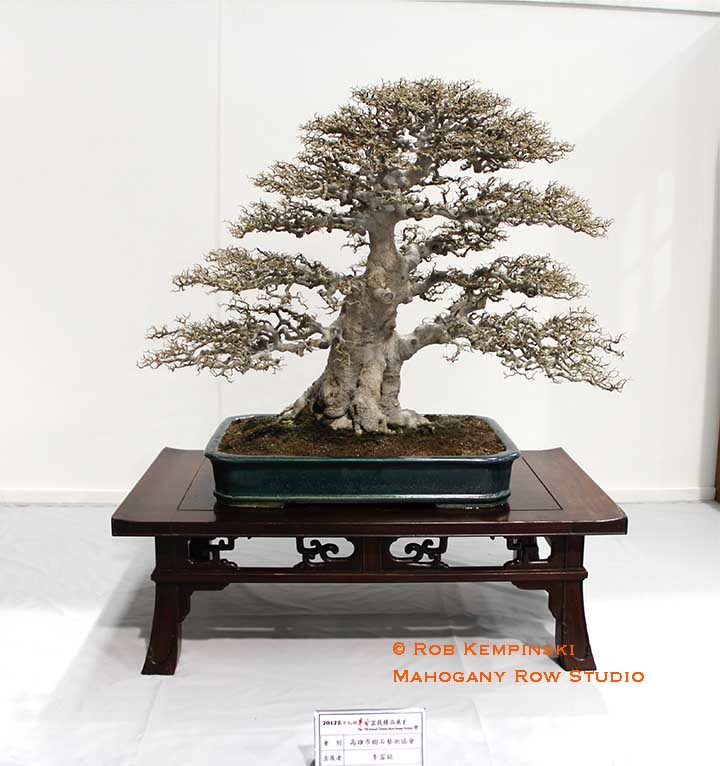
7. Hackberry – Ben Oki, Seattle, Washington USA
Another Hackberry (Celtis occidentalis) earns the number seven spot. This one, by the late Ben Oki, is now displayed at the Pacific Bonsai Museum in Seattle. Ben carved a groove into the trunk and allowed it to heal naturally over time—a masterful example of patience and vision. It demonstrates how modest deciduous material can become a great bonsai. This tree inspired me to create a similar design with Florida elm (“Styled by Wilma”), and any tree that inspiring deserves a place in the top ten.
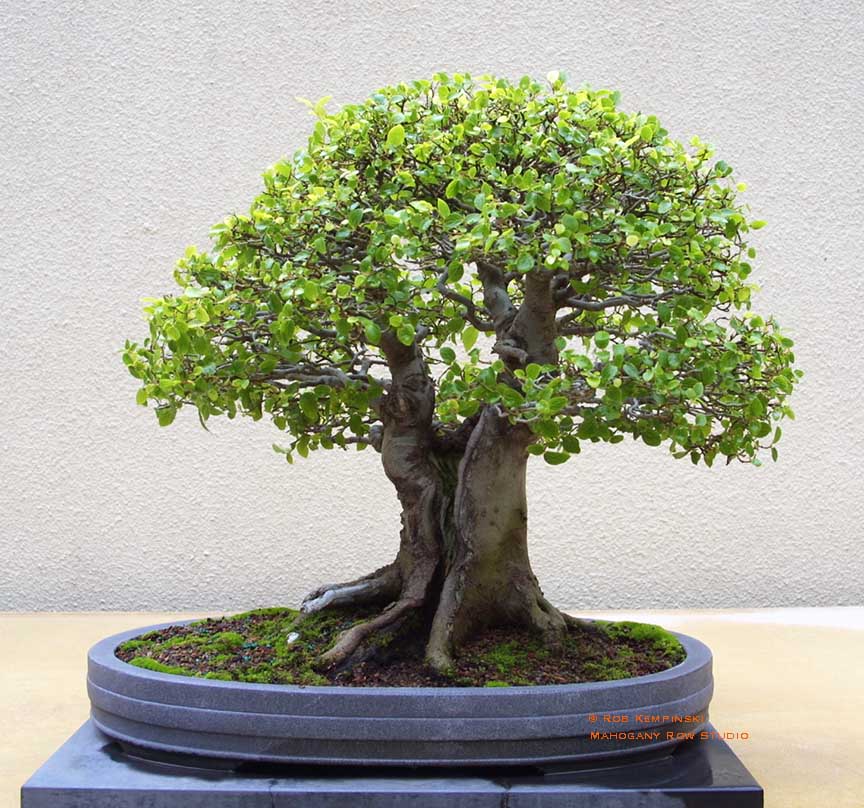
8. Japanese Black Pine – Daizo Iwasaki, Eihime, Japan
Picking the final three is going to be tough as there are so many great ones, but number eight goes to the late Daizo Iwasaki’s slanting Japanese black pine (Pinus thunbergii). I love Japanese Black Pine bonsai, and while I’ve seen hundreds, this one stands out—partly because Mr. Iwasaki was a friend. He called me “NASA-no Ken-chan” because of my work in the space program and wrote me a short letter every year until he passed. He was an outstanding bonsai enthusiast with perhaps the largest personal collection I’ve ever seen. This tree with its sinuous line, great negative space and antiquity remains vivid in my memory.
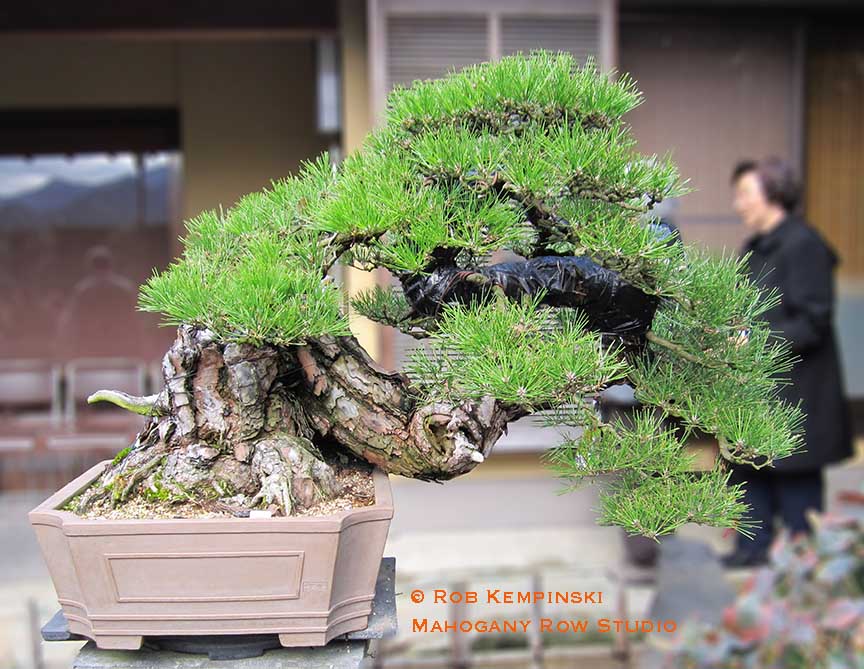
9. Black Persimmon – Artist unknown, Indonesia
The penultimate tree is a Black Persimmon (Maba buxifolia (syn. Diospyros ferrea)) I saw in Indonesia. The dark bark, refined ramification, and powerful structure made a lasting impression. I don’t know the artist or owner, but whoever they are, they’re very lucky to have this tree.
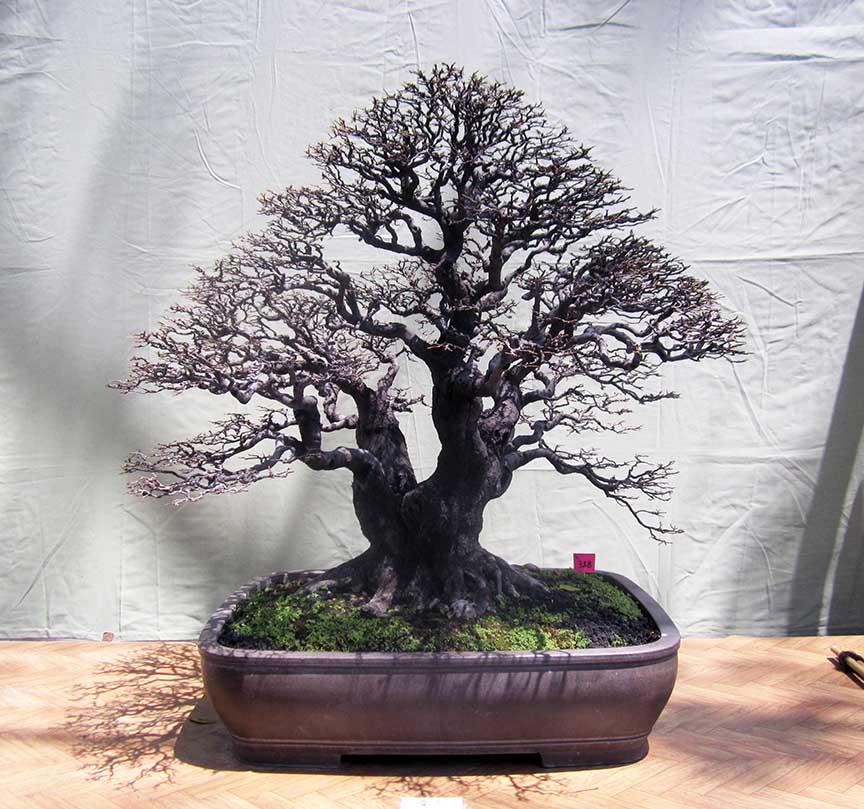
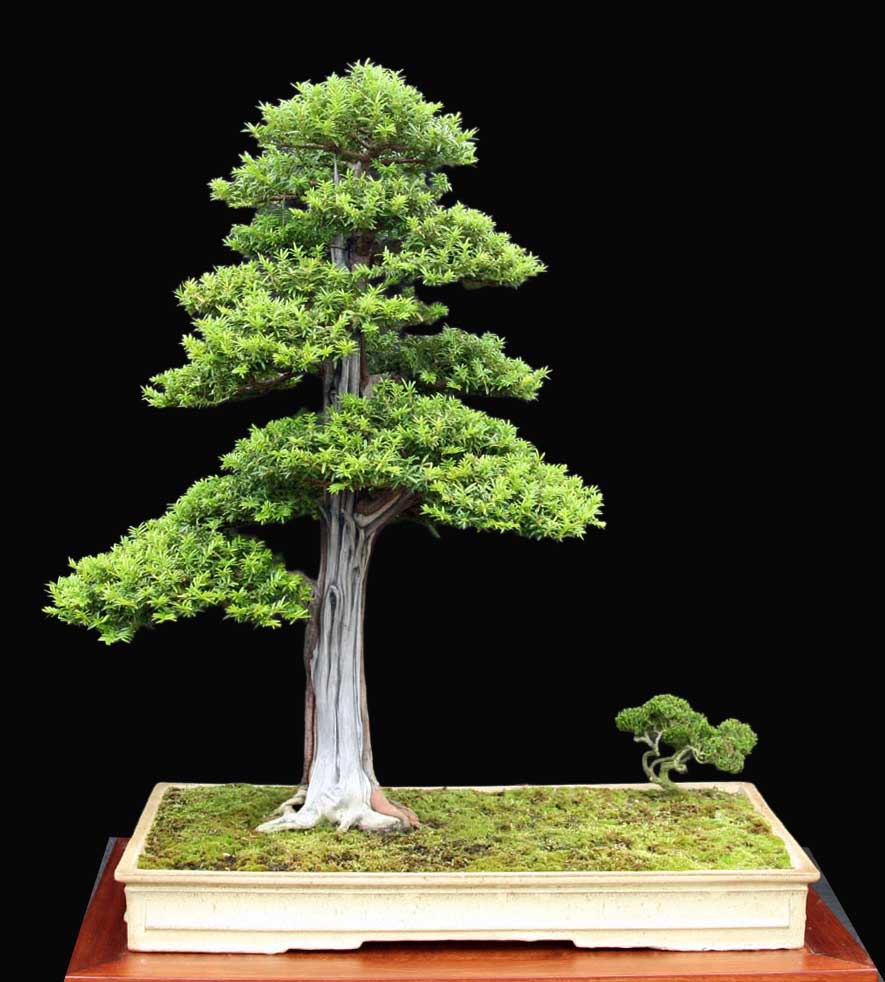
10. English Yew – Simon Temblett, UK
Choosing the final tree was especially difficult, but I’ll return to Simon Temblett for this English yew (Taxus baccata). Doesn’t this tree does not look like someone put a full-size tree in an incredible shrinking machine. Simon also made the pot, further emphasizing his range as an artist. He’s an exceptional talent and now even has a YouTube channel—if only I had time to watch YouTube videos.
That’s my list. It was incredibly hard to narrow things down, and, I could have made a Top 100. But for now, that’s my Top 10. I hope you enjoyed it—feel free to comment with your favorites. Maybe next time I’ll put together a Top 10 list of my favorite creative displays.