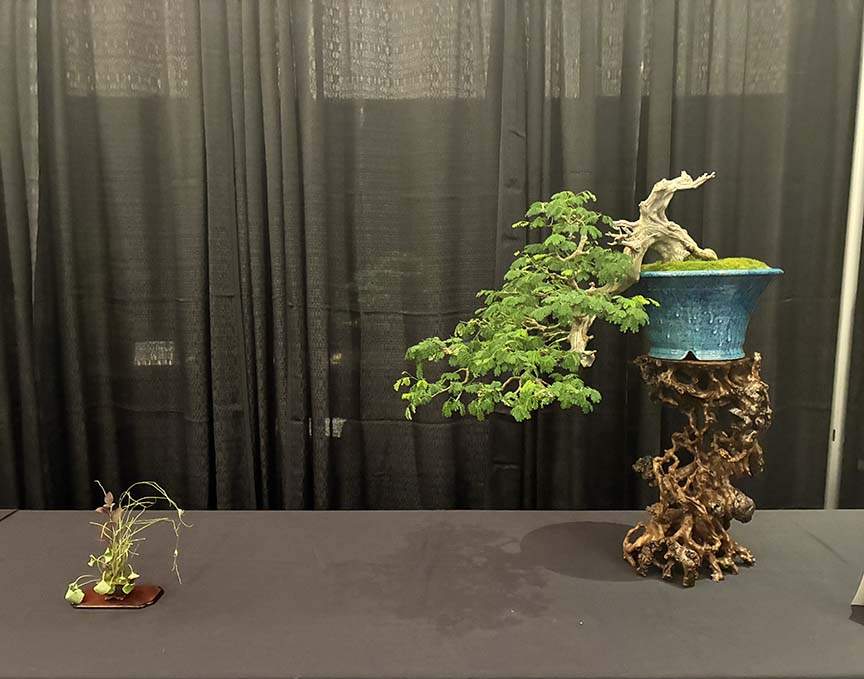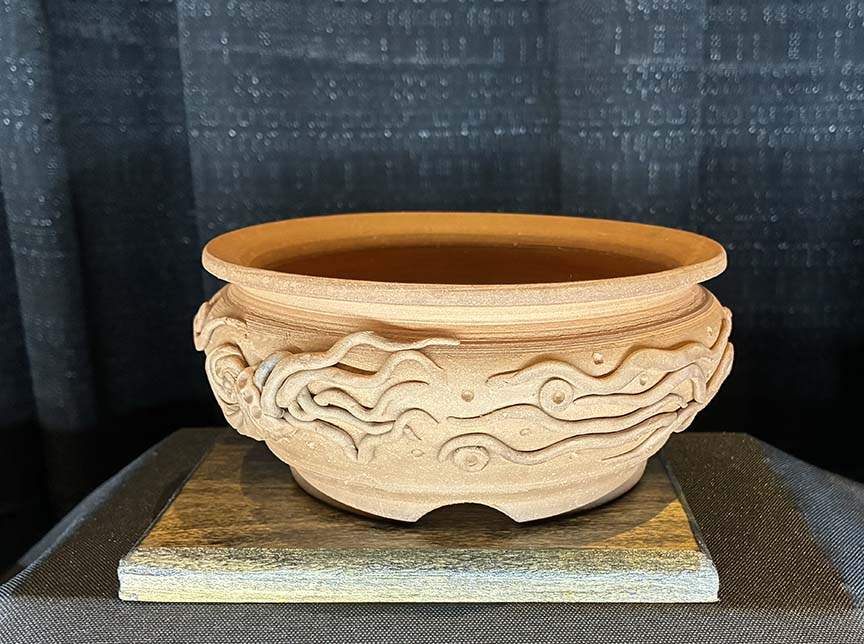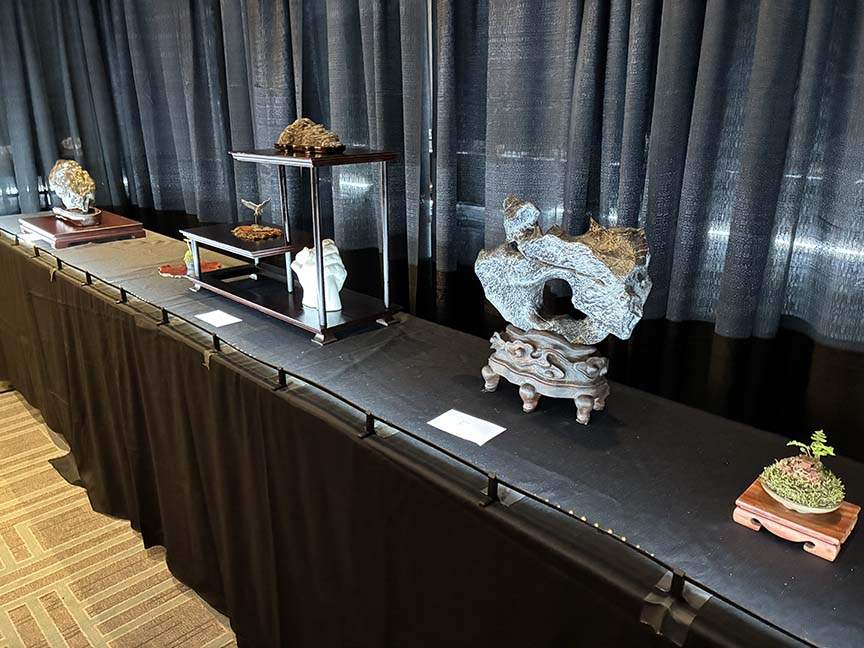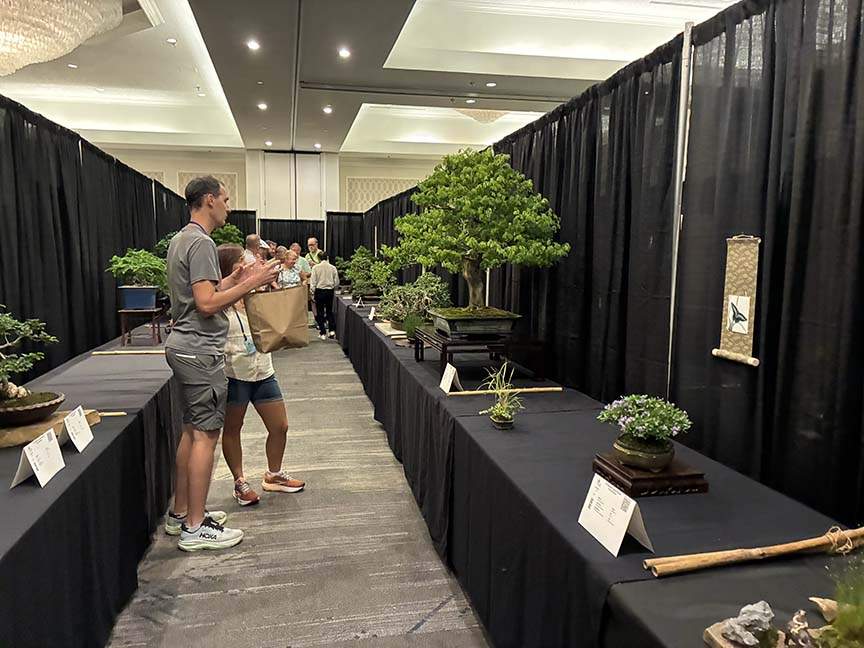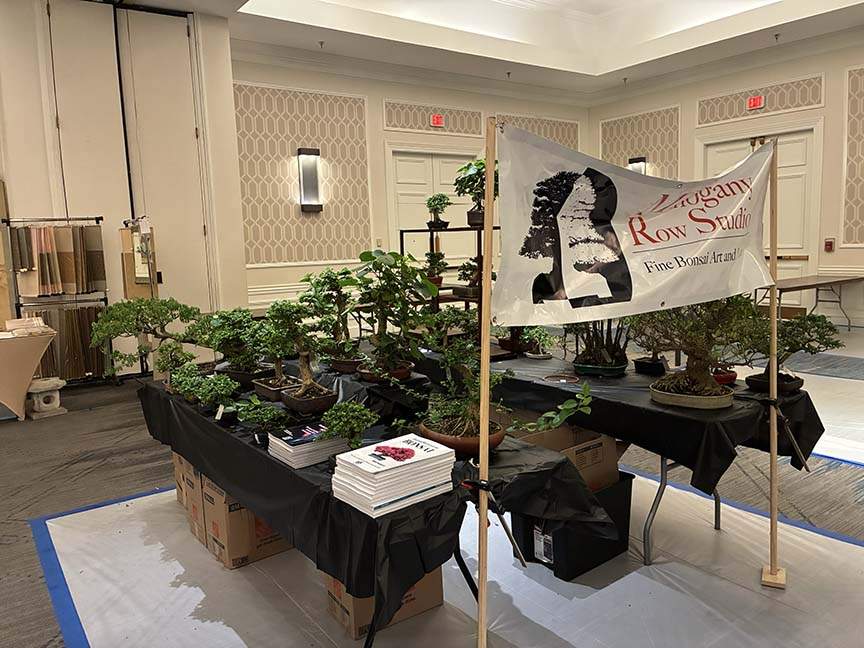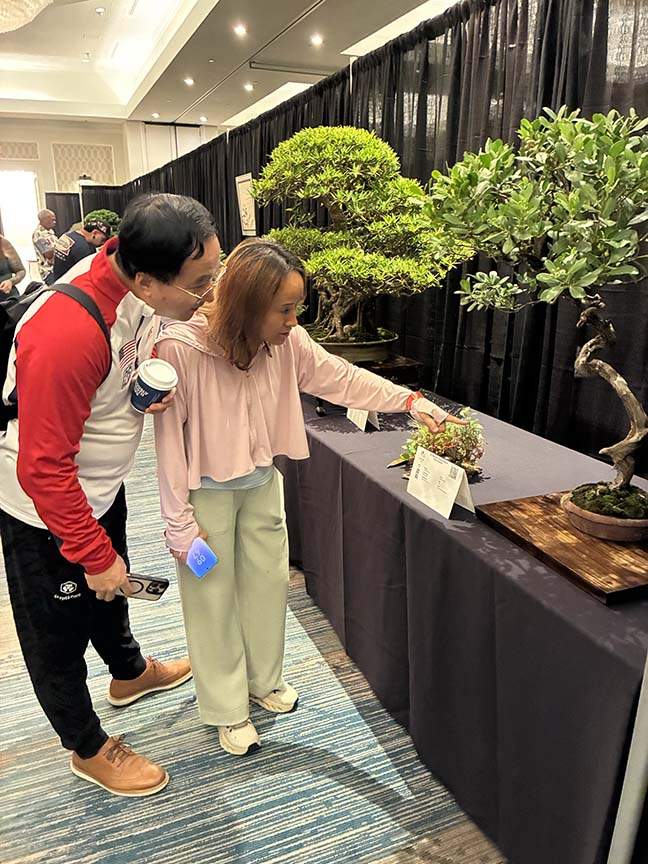
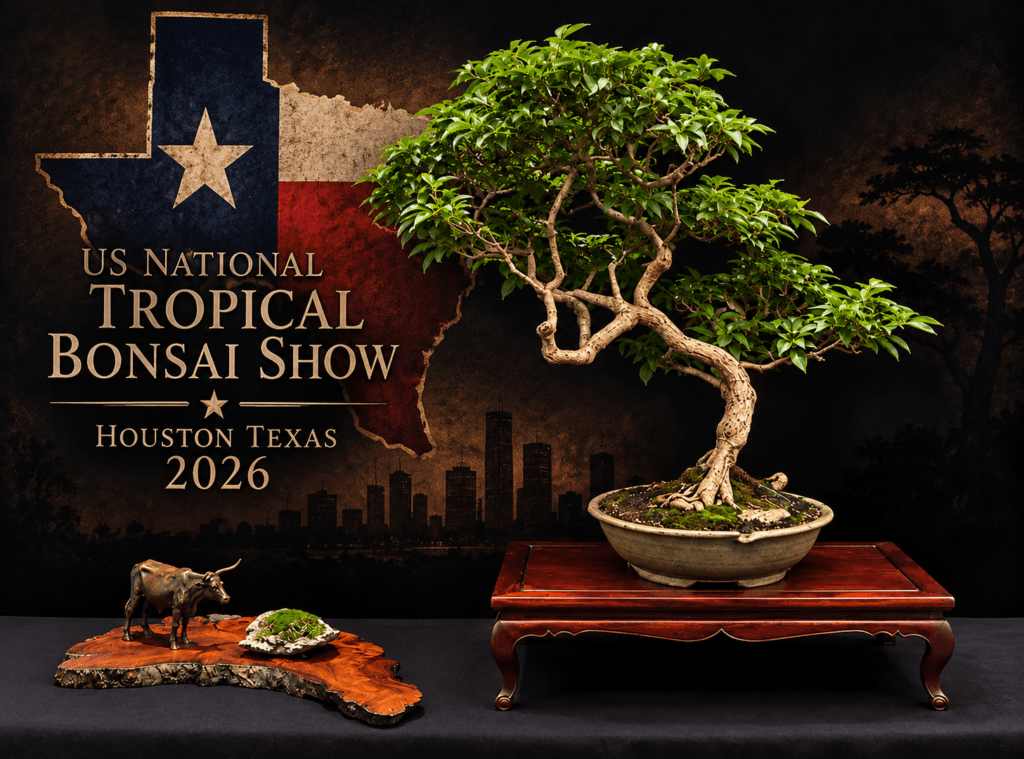
The first US National Tropical Bonsai Exhibition took place in Houston, Texas, during the first weekend of September 2026. More than 100 tropical bonsai from artists representing at least 15 states filled the exhibition hall. For the Bonsai Society of Brevard, Houston carried a more personal significance. Four BSOB members—Bruce Hartman, Dr Reggie and Cosette Perdue, and I—represented our club with seven displays. In addition, two trees that I delivered and donated to the Fort Worth Botanic Garden’s bonsai collection appeared under the garden’s banner.
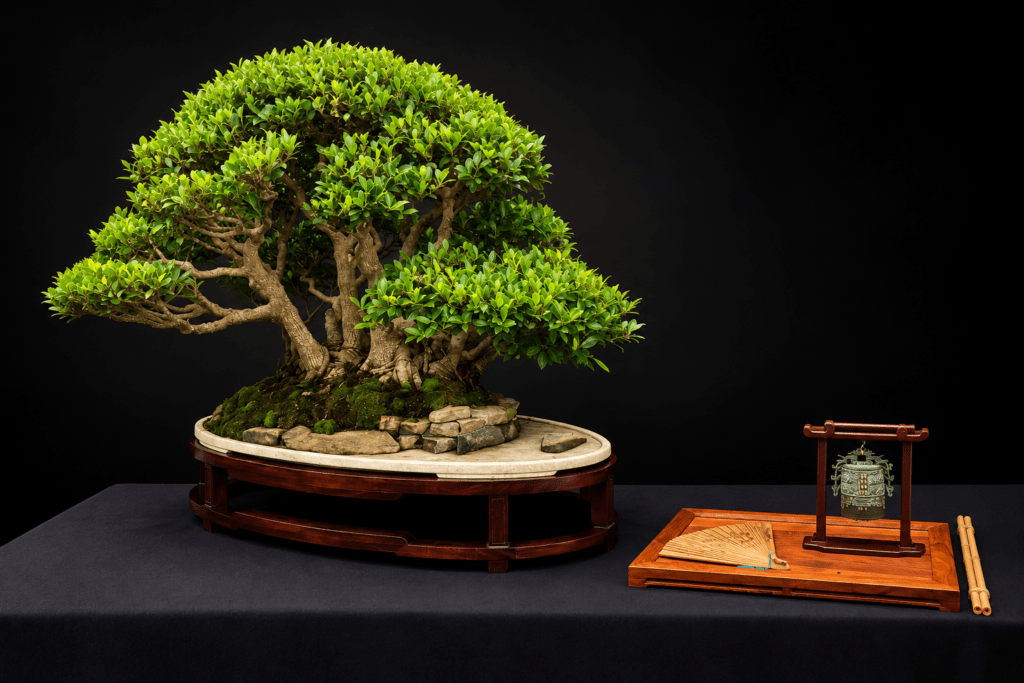
For a local club from Florida’s Space Coast, I think we made a pretty good showing on the national stage. My Cuban laurel fig penjing received the award for Best Chinese-Inspired Display. Another Cuban laurel fig that I donated to the Fort Worth Botanic Garden, spectacularly loaded with figs, received Best Fruiting Bonsai.
Awards never tell the entire story—and anyone who has read much of Kempinski Korner probably knows some of my thoughts about judging bonsai. More importantly, the seven displays from Bruce, Reggie, Cosette, and me demonstrated the quality of tropical bonsai growing right here in Brevard County.
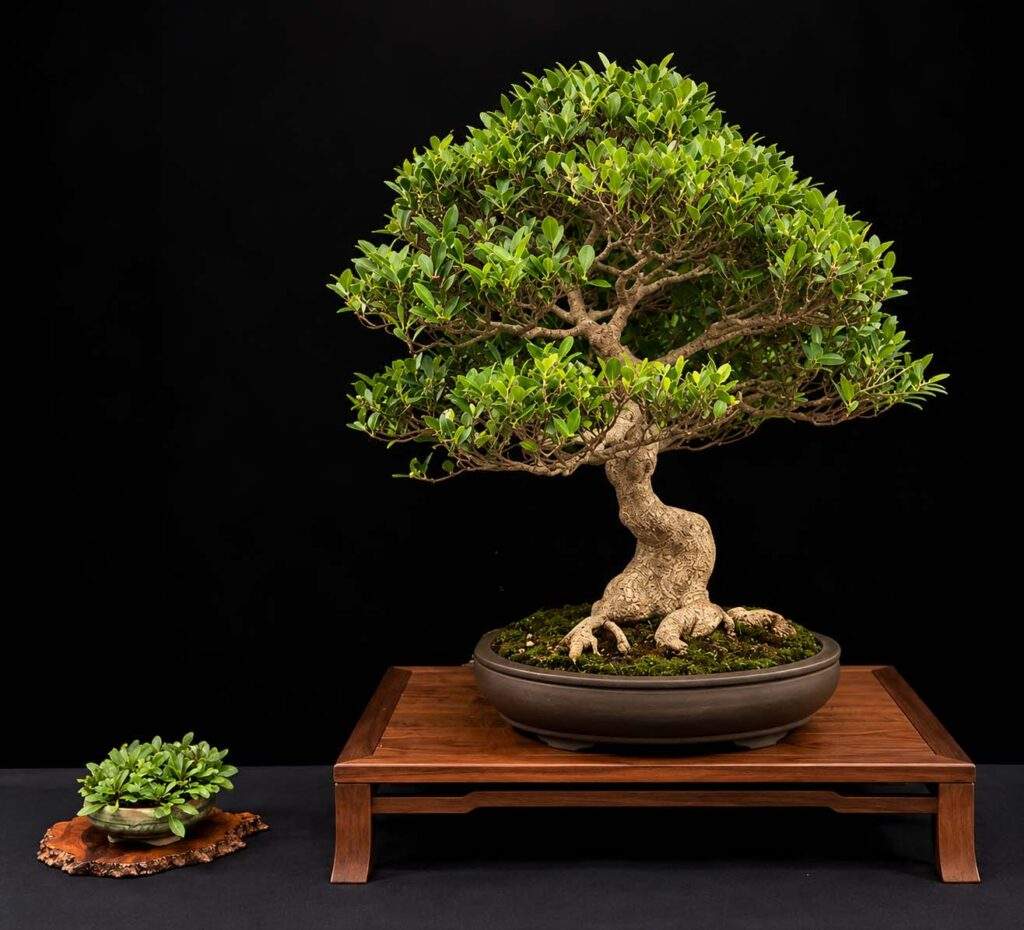
We Grow Good Trees Here
Florida gives us tremendous horticultural advantages. We can work with tropical and subtropical material through most of the year. Ficus, Buttonwood, Headache trees, Bougainvillea, Satlbush, Water Jasmine and dozens of other species respond vigorously to our climate. But climate alone does not create good bonsai.
Club study groups, club programs, visiting artists– all the benefits BSOB offers combined with years of pruning, wiring, repotting, branch selection, refinement, and occasionally starting over help create excellent bonsai. Houston allowed us to place our work alongside excellent tropical bonsai from across the country. I came home convinced that the quality of tropical bonsai within our club can stand comfortably on that larger stage.
Not Just Showing Trees—Growing Them
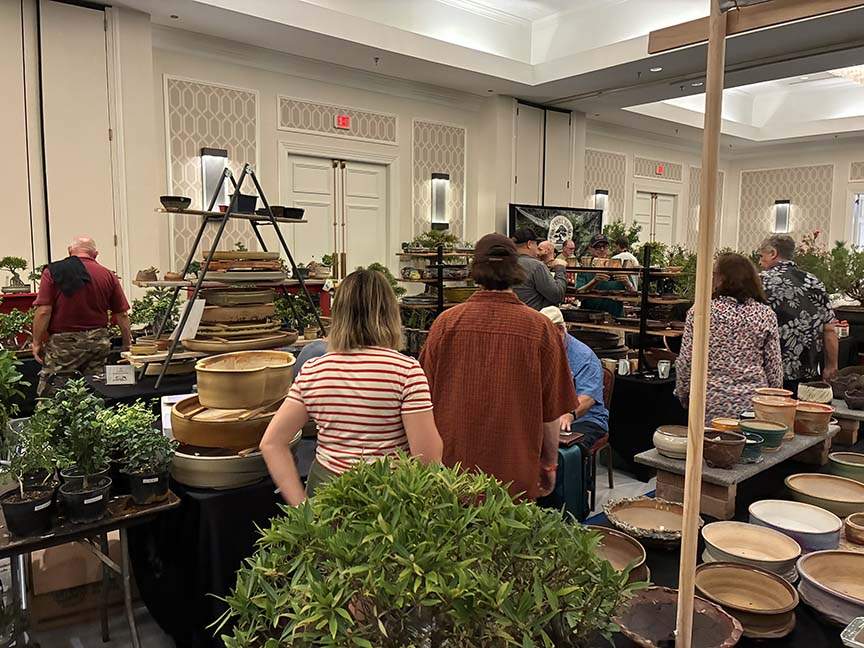
Reggie and I also participated as vendors, bringing trees we had propagated and developed in Florida. We did extremely well, and many of those trees left Houston with new owners from around the United States. Getting the Brevard footprint all over the USA is very cool.
Bonsai sometimes places tremendous emphasis on acquiring old material. We celebrate ancient collected trees and specimens that arrive with much of their age already established. Tropical bonsai offers another route. We can grow the age ourselves. Our long Florida growing season allows us to start with cuttings, seedlings and young nursery material and develop substantial bonsai within reasonable periods of time. That still requires years of work, but it creates a sustainable pipeline of future bonsai rather than depending entirely upon old collected material.
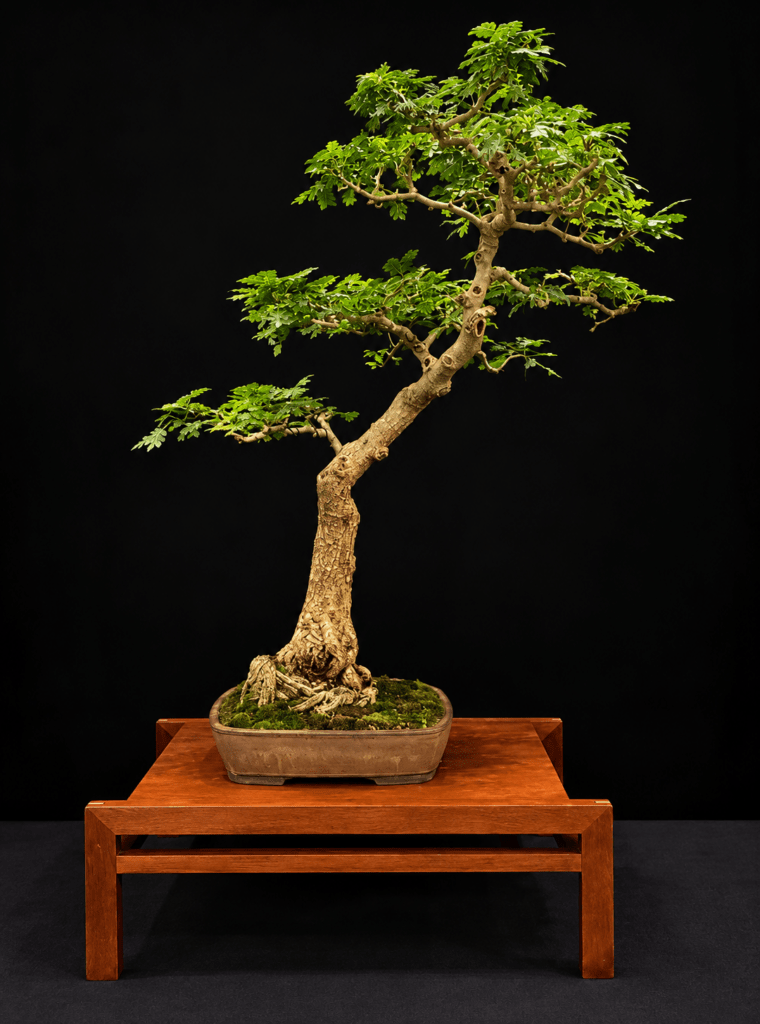
The Tree’s Story Does Not End at the Edge of the Pot
Houston also reinforced another subject I have discussed frequently: display. In addition to conventional tree awards, the organizers recognized Chinese-inspired display and creative display. My Cuban laurel penjing receiving the best Chinese display award obviously made that particularly interesting to me, but the larger idea matters much more than the award. American bonsai has borrowed heavily from Japanese exhibition aesthetics, and we have learned an enormous amount from Japan. But somewhere along the way, many American artists started treating one Japanese-derived exhibition vocabulary almost as a requirement. Tree. Stand. Accent. Scroll when appropriate. Proper spacing. Follow the formula.
Why?
Bonsai reaches back through the Chinese traditions of penjing and penzai before its development in Japan. Chinese approaches offer different relationships among trees, stones, figurines, containers and landscape. American artists also bring our own landscapes, experiences, humor, history and culture to the art.
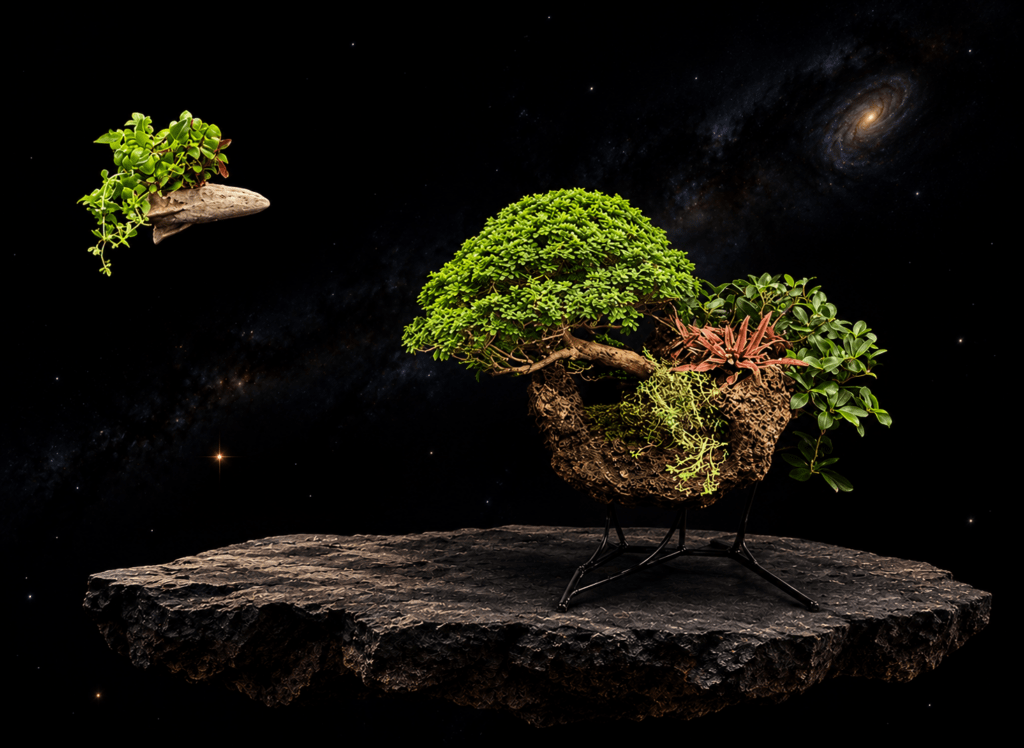
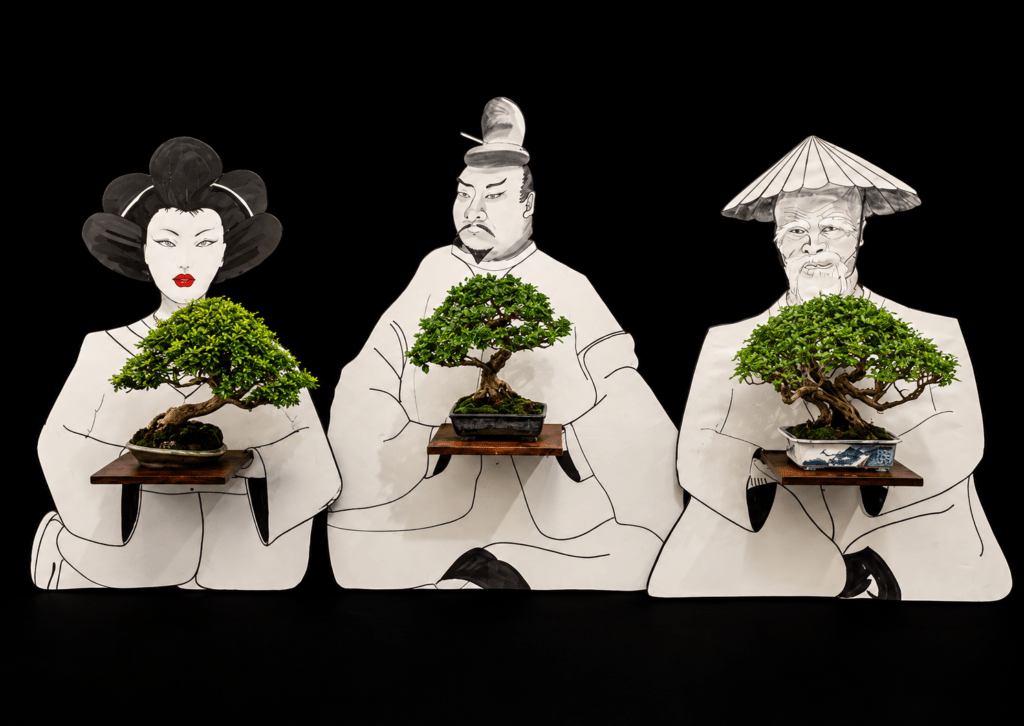
Houston encouraged those possibilities. Several displays drew upon Chinese aesthetics. Others ventured into creative storytelling and referenced landscape or culture rather than simply presenting a tree as an isolated object. I found that refreshing. Once we place a great tree in an exhibition, the space around it becomes part of the composition. Then we can ask another question: What story does this display and tree tell?
Perhaps that question provides the most useful lesson BSOB can bring home from Houston.
Where Does Brevard Go From Here?
We already grow good trees. Our showing was more than an accomplishment, I regard it as demonstrating potential.
Imagine more BSOB members developing trees specifically with future national exhibitions in mind.
Imagine working on a tree today and saying, “I want this tree ready for the next national exhibition.“
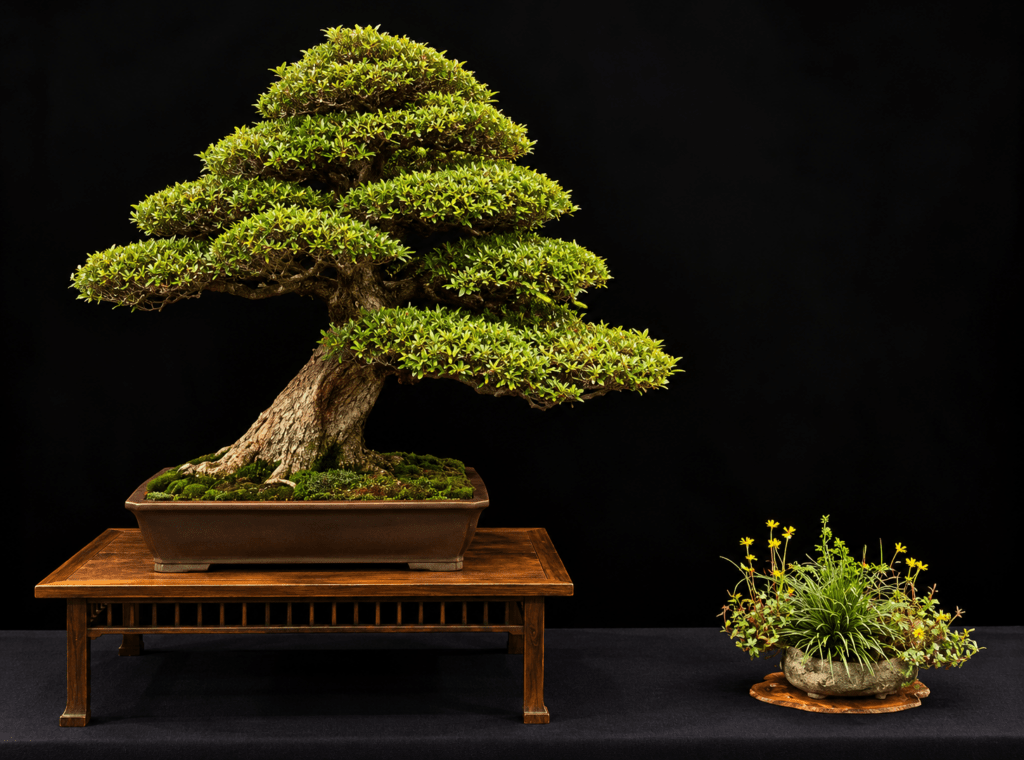
Imagine thinking about the eventual display while developing the tree rather than waiting until exhibition week to find a stand and an accent.
And imagine displays that say something about us — our stories, ideas and experience and about Florida—our coastlines, hammocks, wetlands, storms, wildlife, architecture, history and unique culture—rather than automatically imitating what someone might place in a Japanese tokonoma display niche.
None of this requires abandoning tradition. Tradition gives us knowledge, techniques, principles and a foundation. But tradition should provide a launching point, not a finish line.
The first National Tropical Bonsai Exhibition demonstrated that tropical bonsai can stand alongside any other form of bonsai as serious art. For BSOB, it demonstrated something more immediate: nationally competitive work already grows right here in Brevard County. We displayed art, brought home recognition, sold trees, placed Brevard-grown material into collections around the country, and returned with plenty of new ideas. We all can do it.
Next time, I hope we need a bigger truck.
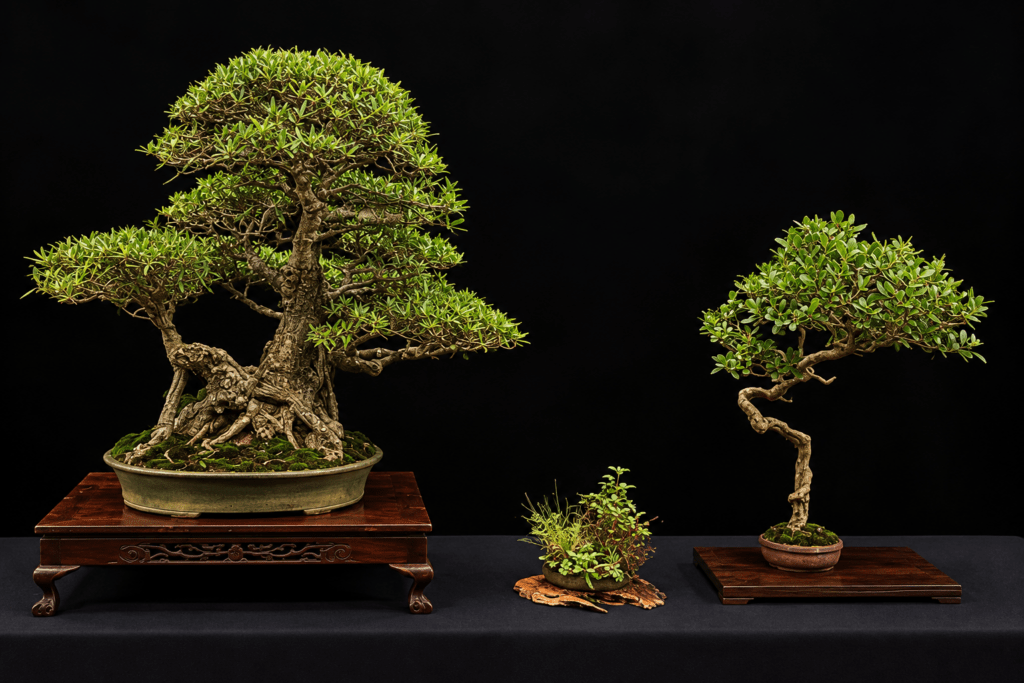
Here are some other shots from the event.