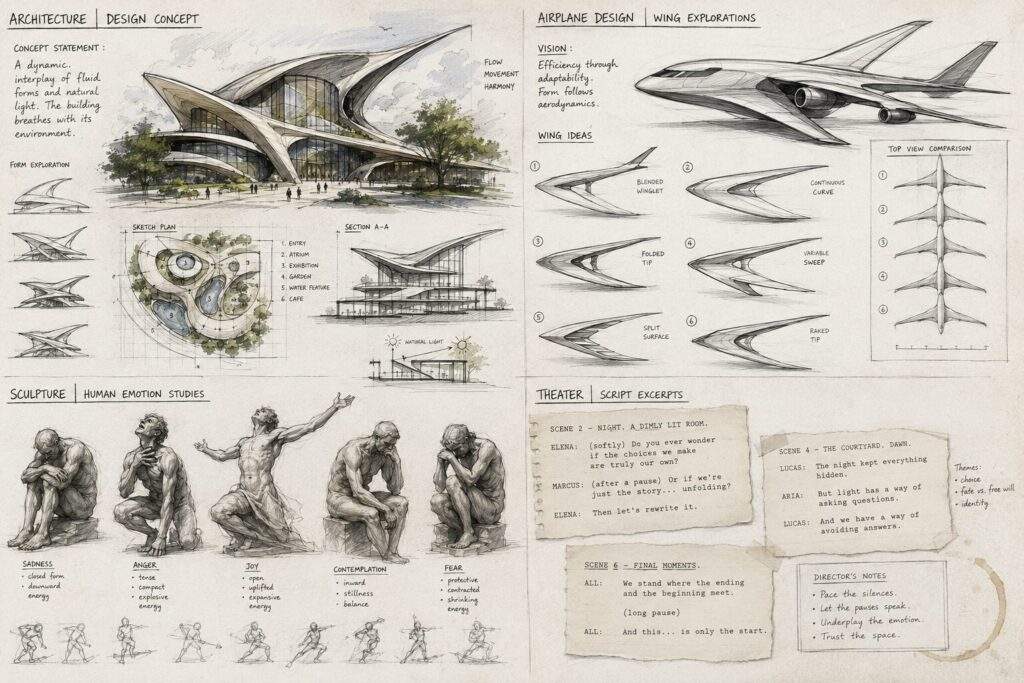
When I give a bonsai program, I usually begin by telling people that the first step in creating a tree is to develop a design concept. Over time, I have realized that not everyone understands exactly what I mean by that. This month, I want to explore the idea of a design concept and use a specific example to illustrate the process.
A design concept can apply both to the tree itself and to the way it will ultimately be displayed. In many cases, I think about the future display while I design the tree. The two are often inseparable. When the tree and its presentation reinforce one another, the result can create a much stronger emotional impact.
Design Concept
So, what exactly is a design concept?
A design concept is the underlying idea, story, emotion, or visual inspiration that guides artistic decisions. It serves as a framework that influences everything from the tree species and styling choices to the container, stand, accessories, and display configuration. Rather than simply wiring branches or selecting a pot to show just a tree, the artist is attempting to communicate a larger vision.
Let’s Get Lighter Than Air
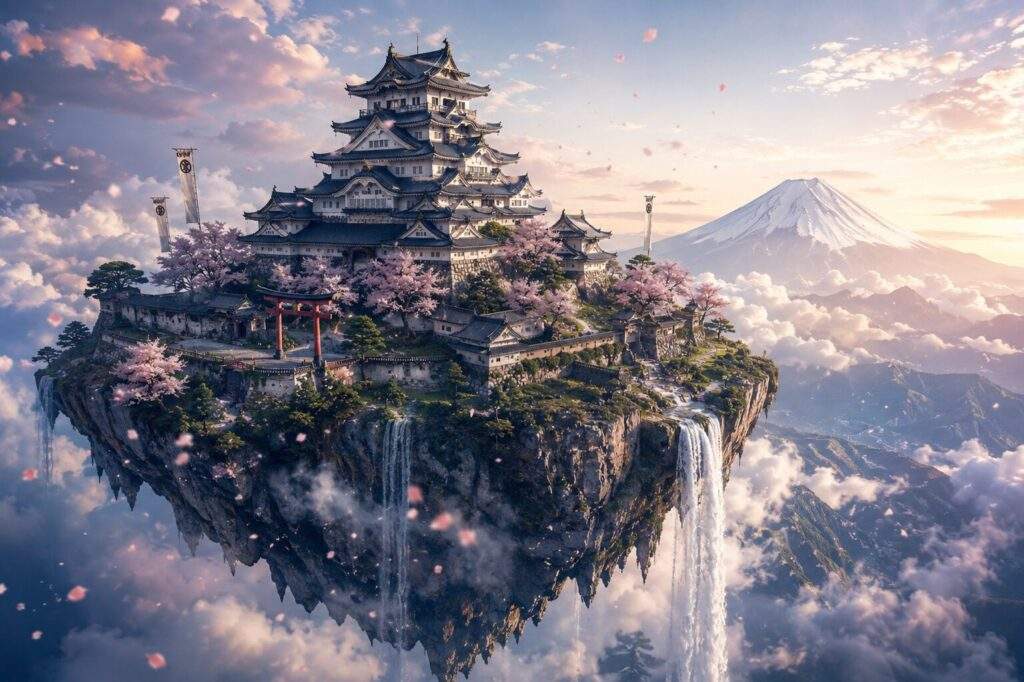
To illustrate this idea, let’s use an example. Imagine creating a bonsai whose design concept is an island floating in midair, similar to those seen in the movie Avatar.
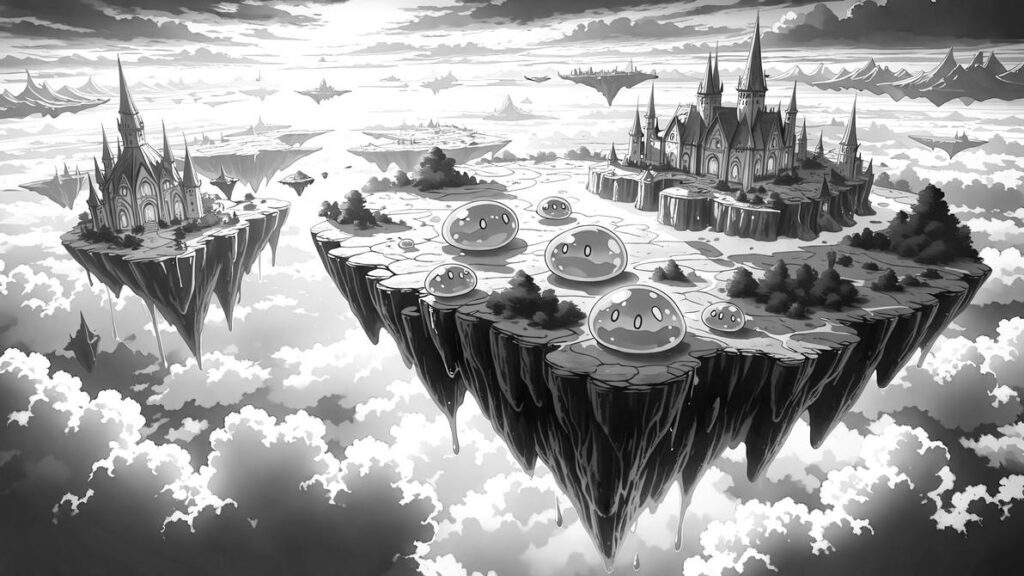
Of course, floating islands do not exist in reality—at least not until someone invents antigravity! It goes without saying this is a non-earthly concept. Yet artists have always drawn inspiration from fantasy, mythology, and imagination. The challenge is to translate that vision into a believable artistic expression.
The first step is to explore the concept itself. What images and ideas come to mind when we think of islands floating in air?
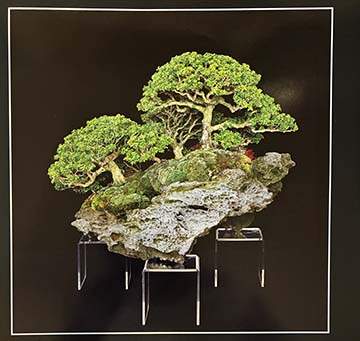
The movie Avatar immediately provides one source of inspiration, with enormous land masses suspended in the skies of an alien world. But there are many others beyond Hollywood movies.
Nature also offers examples that create a similar visual impression. The dramatic limestone karsts of Ha Long Bay in Vietnam appear almost to float above the water as erosion has separated and isolated the towering cliffs. Certain mountain landscapes create the same feeling of detached masses shrouded in clouds hanging above the valleys below.
Vegetation can also reinforce the illusion. Trees with cascading or pendulous foliage or aerial roots help suggest that roots and branches are extending downward from an elevated island. Mosses, ferns, and trailing plants can create the appearance of a self-contained ecosystem suspended in midair.
Today, one useful tool for exploring design concepts is both Google searches and artificial intelligence. Studying on-line galleries and programs such as ChatGPT or image-generation systems can help artists brainstorm ideas by producing descriptions or visual concepts for a floating-island bonsai. These tools do not replace creativity, but they can serve as valuable partners during the early stages of design development, helping artists consider possibilities they may not have imagined on their own.
Gravity
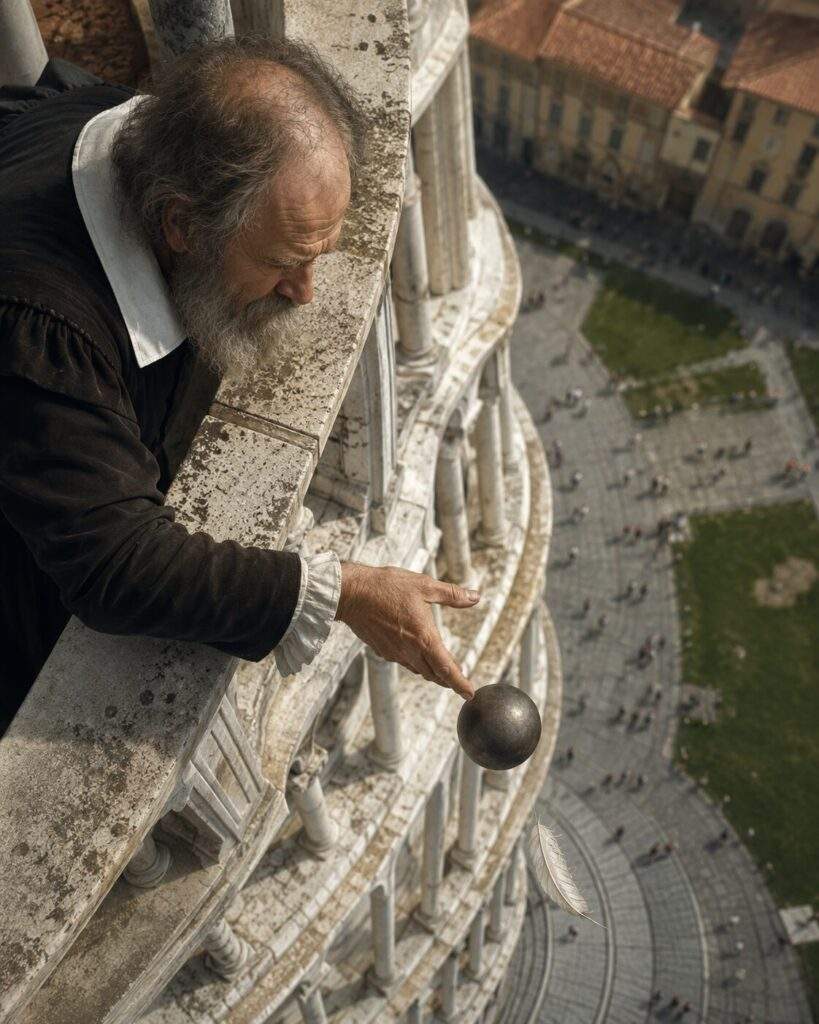
Once we settle on the concept, we encounter the practical problem: gravity.
How do we create a floating island in a world where everything falls downward?
The container and support structure become critical elements of the design. Several approaches are possible.
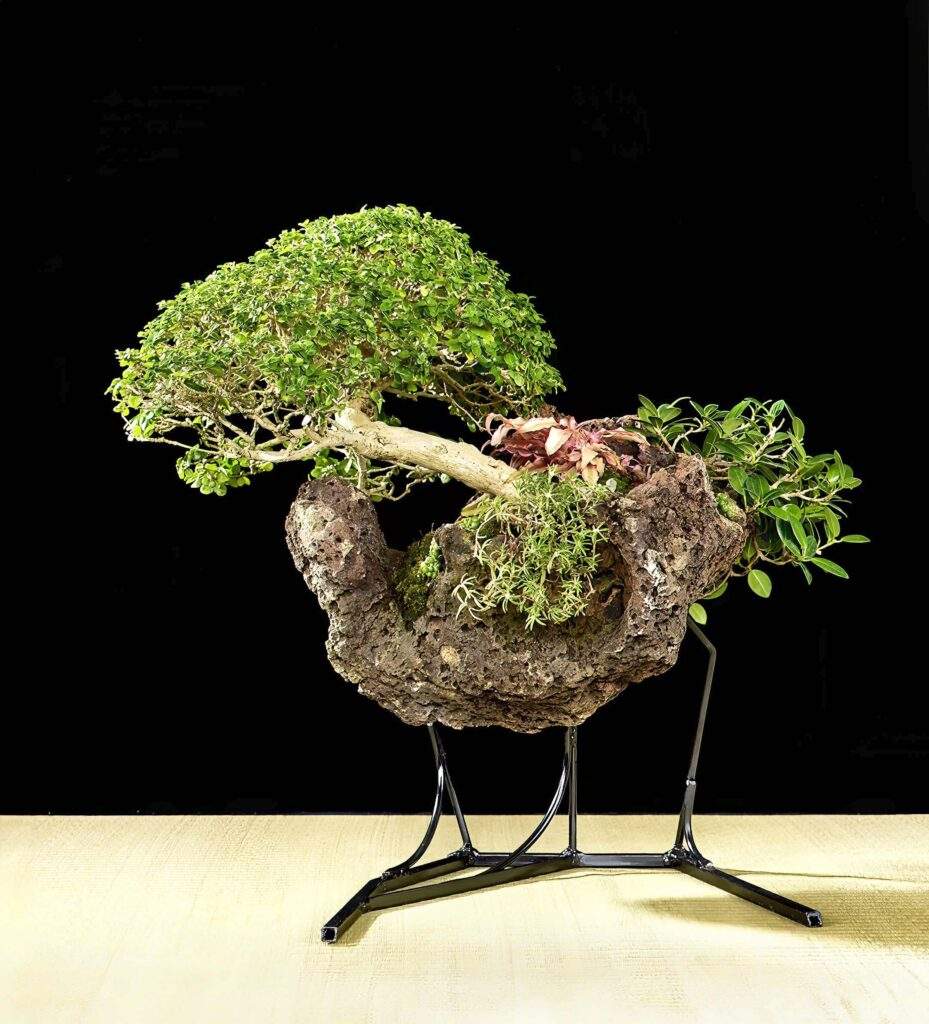
One method is to use a concealed metal rod or armature hidden within the trunk or behind foliage. The support becomes nearly invisible, creating the illusion that the island is genuinely suspended in space. If painted black with a black backdrop they take on the roll of the theatrical tradition called Kuroko (黒子) in Japanese Kabuki and Bunraku puppet theater. In the viewers mind they disappear.
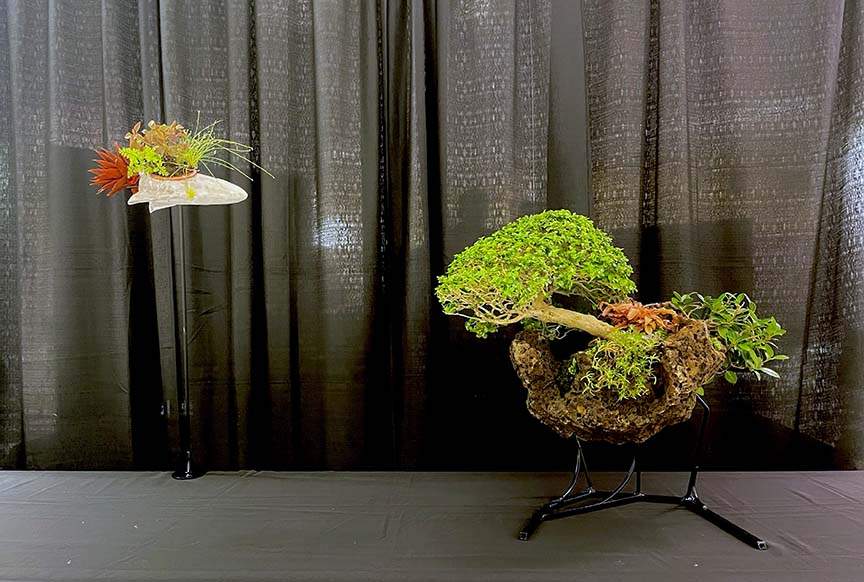
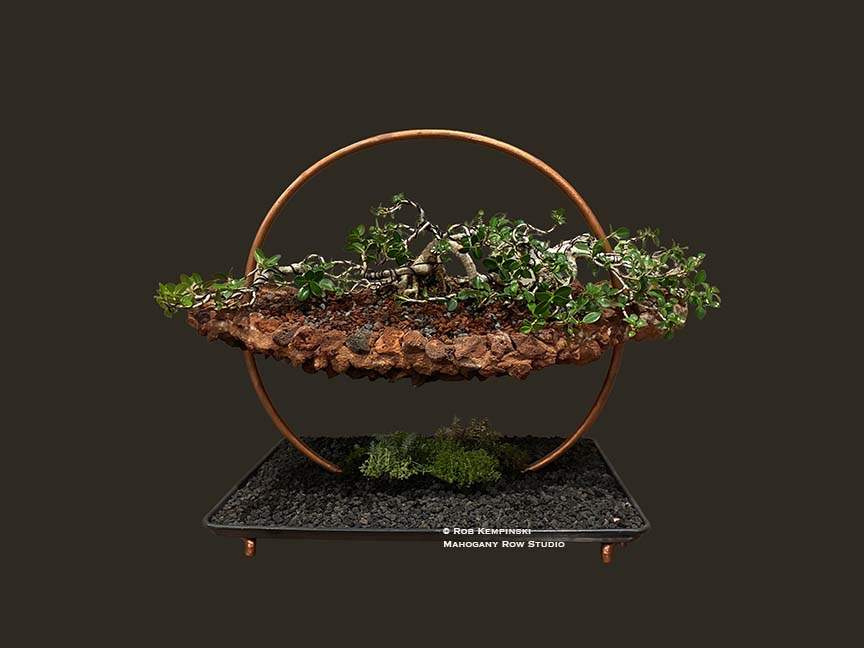
Another possibility is to suspend the planter using thin cables or wires attached to an overhead framework. If the wires are carefully positioned and painted to blend into the background, they can become surprisingly unobtrusive.
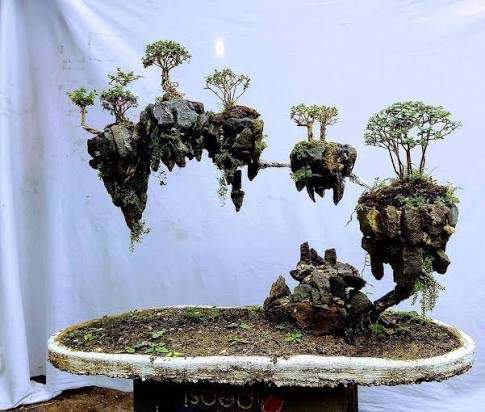
A third approach is to design a dramatic sculptural stand that intentionally supports the island while still suggesting lightness and elevation. Twisted roots, welded segments of chains, beams or rods, stylized rock formations, or abstract artistic forms can all serve as structural elements without breaking the illusion.
Magnetic levitation systems represent an even more futuristic solution.
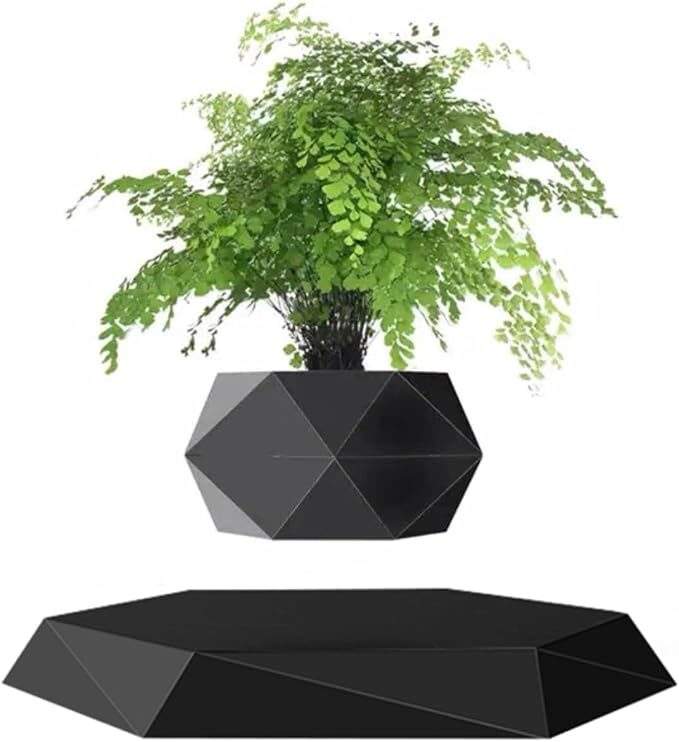
Although current technology limits the weight that can be supported, advances in this area may someday allow truly levitating bonsai displays. Imagine exhibiting a tree that actually floats above its stand!
The important lesson is that the physical challenges become part of the artistic problem-solving process. The support system is not just engineering—it is an extension of the design concept itself.
Thinking in terms of concepts rather than rules opens tremendous creative possibilities. A bonsai artist might choose to evoke a floating island, mountain to castle, a windswept lakeshore, a forgotten temple, or even a scene from mythology. The goal is not simply to grow a miniature tree but to create an emotional experience for the viewer.
Strong Design Concepts Tell Stories
When we begin with a strong concept, every artistic decision becomes more purposeful. The tree, container, stand, and display all work together to tell a story. In the end, that story is often what people remember most.
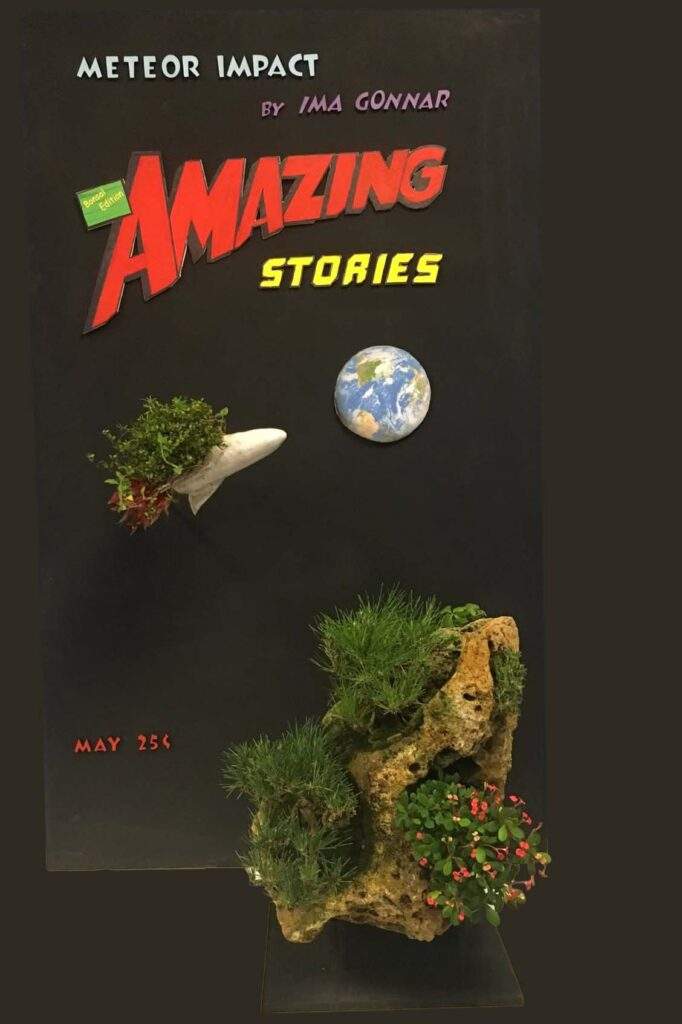
The next time you begin styling a tree, ask yourself a simple question: What is the concept I am trying to express? The answer may lead you to create something far more memorable than you originally imagined. And get working on antigravity. The world will love you for it.