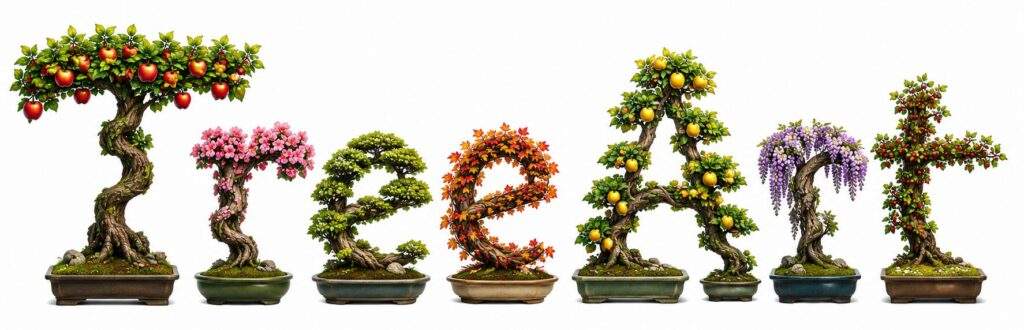
Lately I have noticed that artists exploring new approaches to bonsai design and display often attract significant pushback from other so-called bonsai artists. Pushback may be too mild a term. Creative artists are frequently met with scorn, ridicule, and even exclusion. How can we resolve this persistent conflict between innovators and imitators? Perhaps it is time to consider a new name for the art itself: Tree Art
For more than a century, the word bonsai has been used worldwide to describe the cultivation and artistic presentation of miniature trees. The Japanese term literally means “tree in a tray.” It carries a rich history and a connection to generations of artisans who refined the practice into one of the world’s most recognizable crafts.
Yet bonsai now stands at a crossroads. As the art expands globally and attracts artists from many cultures the word bonsai has become limiting. Does it encourage creativity, or does it anchor artists to a narrow interpretation of tradition? Has the name become associated with an incorrectly perceived set of rules rather than a broader artistic pursuit? If so, would a term such as Tree Art better represent where the art is heading?
These questions are worth exploring because bonsai is no longer solely a Japanese practice. It has become a global art form, and global art forms evolve.
Bonsai Beyond Japan
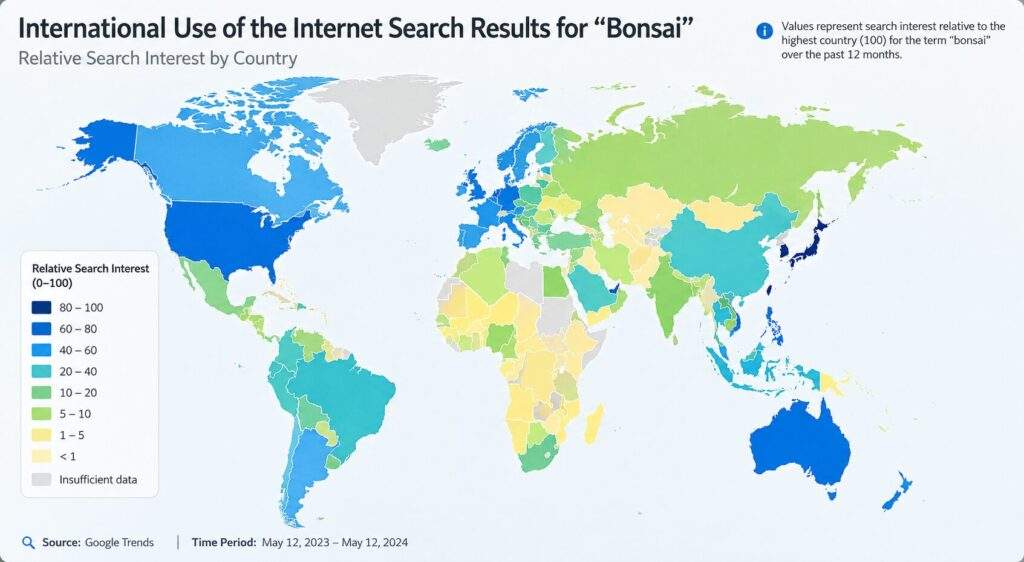
Today there are thriving bonsai communities throughout North America, Europe, South America, Africa, Australia, and Southeast Asia. Artists work with native species, different climates, and cultural influences that would have been unfamiliar to the Japanese artisans who established many of the conventions followed today.
This globalization has created tremendous opportunities for creativity. Artists are experimenting with new species, display methods, aesthetic approaches, and interpretations of what a miniature tree can communicate. Yet creativity is often met with resistance.
Many traditionalists insist that bonsai should be practiced exactly as they believe it is practiced in Japan. New ideas are dismissed not because they fail artistically, but because they differ from perceived conventions. Experimental work is often labeled “wrong,” “not bonsai,” or even “trash.”
Its clear tradition has value providing a foundation of accumulated knowledge and experience. But when tradition becomes dogma, it can prevent artistic growth. Any art form that refuses to evolve risks becoming a historical artifact rather than a living creative discipline.
The Irony of Tradition
Ironically, many advocates of strict tradition are working from an incomplete understanding of that tradition. Western practitioners often view Japanese bonsai as a fixed set of rules passed down unchanged through generations. The reality is far more complex. Japanese bonsai has never been static. Every generation introduced new techniques, new styles, and new interpretations.
What many Western enthusiasts consider “traditional Japanese bonsai” is often simply a snapshot of Japanese practice from a particular moment in history. Some practitioners outside Japan are attempting to preserve versions of bonsai that Japanese artists themselves have already moved beyond. Artistic traditions survive because they adapt.
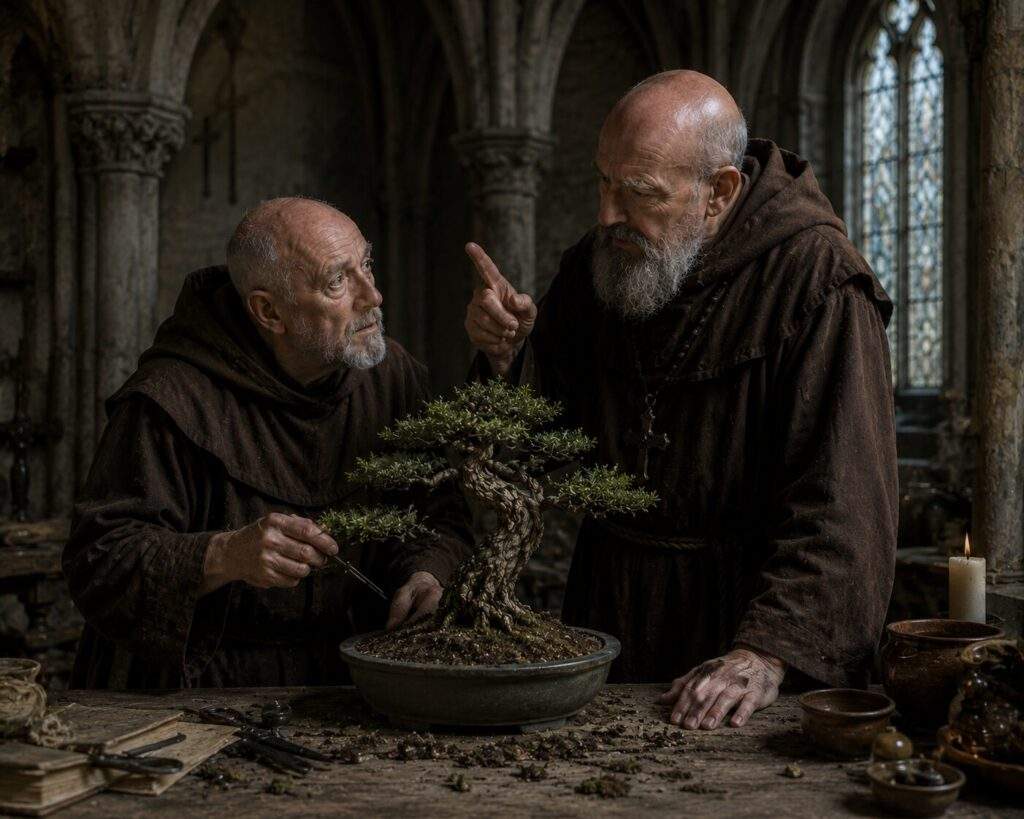
Bonsai Did Not Begin in Japan
While Japan refined the art and introduced it to much of the modern world, bonsai did not originate there. The earliest forms of miniature tree cultivation emerged in China, where they were known as penjing and earlier forms sometimes translated as pensai. Chinese artists were creating miniature landscapes and trees centuries before the practice became established in Japan. Chinese trees such as lingnam style still set high artistic standards.
With pensai’s migration to Japan there’s no doubt Japan’s contribution was extraordinary. Japanese artisans refined aesthetic principles, developed new techniques, and elevated the presentation of individual trees to remarkable levels of abstraction – to point where there is nothing natural about the trees.
The events after World War Il promulgated the word “bonsai” globally, yet recognizing the Chinese roots reminds us that the art has always been shaped by cultural exchange. If Chinese traditions influenced Japan, why should modern artists not contribute influences from Europe, the Americas, Africa, or elsewhere? The history of bonsai suggests that adaptation is natural, not threatening.
The Language Barrier
One visible sign of rigid traditionalism is the insistence on Japanese terminology. There is value in learning Japanese terms. Words such as nebari, jin, and eda often describe concepts with no precise English equivalent. Problems arise, however, when terminology becomes a barrier rather than a tool.
Consider the word shohin. In Japanese it simply means a small tree. Yet many English-speaking practitioners insist on using the Japanese term even when speaking exclusively to other English speakers. At times this appears less like education and more like gatekeeping.
Language should facilitate communication, not restrict it. When excessive emphasis is placed on a Japanese terms, including the use of the word bonsai, it ignores the fundamental evolution of trees as art. Terminology should adopt to the local regions just like the Japanese used their language when adopting pensai. Tree Art then offers a logical alternative.
The Display Problem
Resistance to innovation may be even more evident in bonsai display than in tree design. Many practitioners spend years learning display conventions derived from Japanese niche in a wall (tokonoma) presentations. There is nothing wrong with understanding these traditions. The problem arises when display becomes an exercise in rule-following rather than artistic communication.
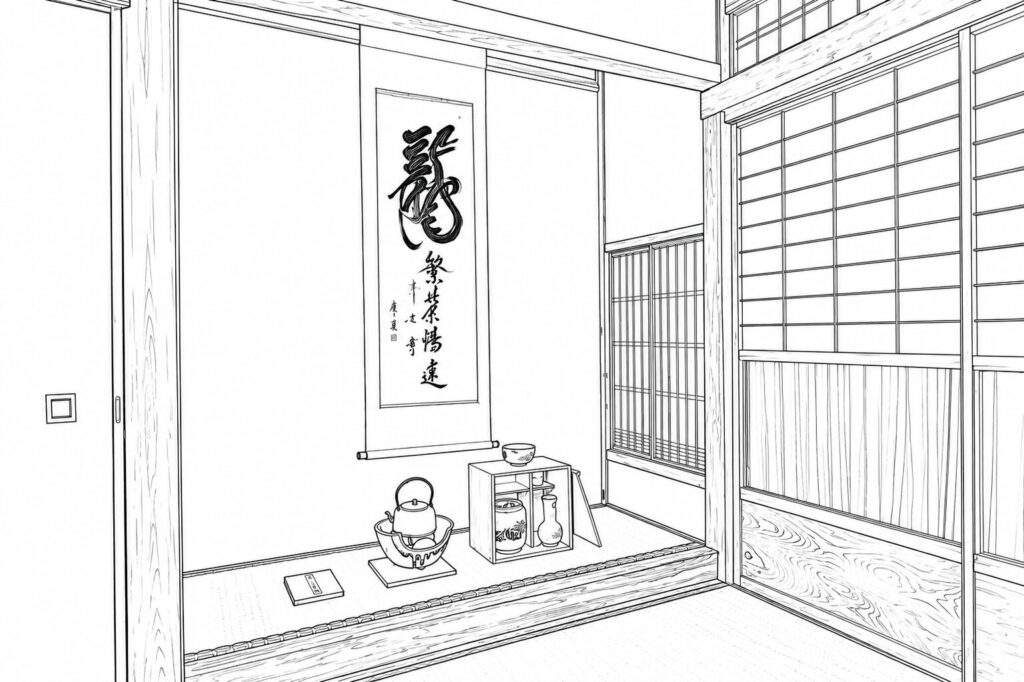
An exhibition table in a large commercial venue is not a Japanese indoor niche. Too often artists struggle to apply simplified or misunderstood rules meant for Japanese niche display to exhibition table display. They tend to ignore developing the emotional intent of the work and they ignore western cultural allusions.
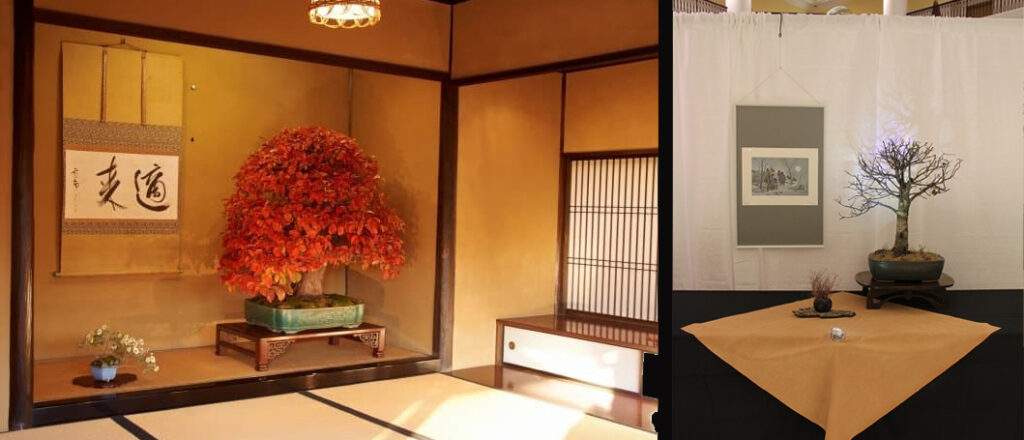
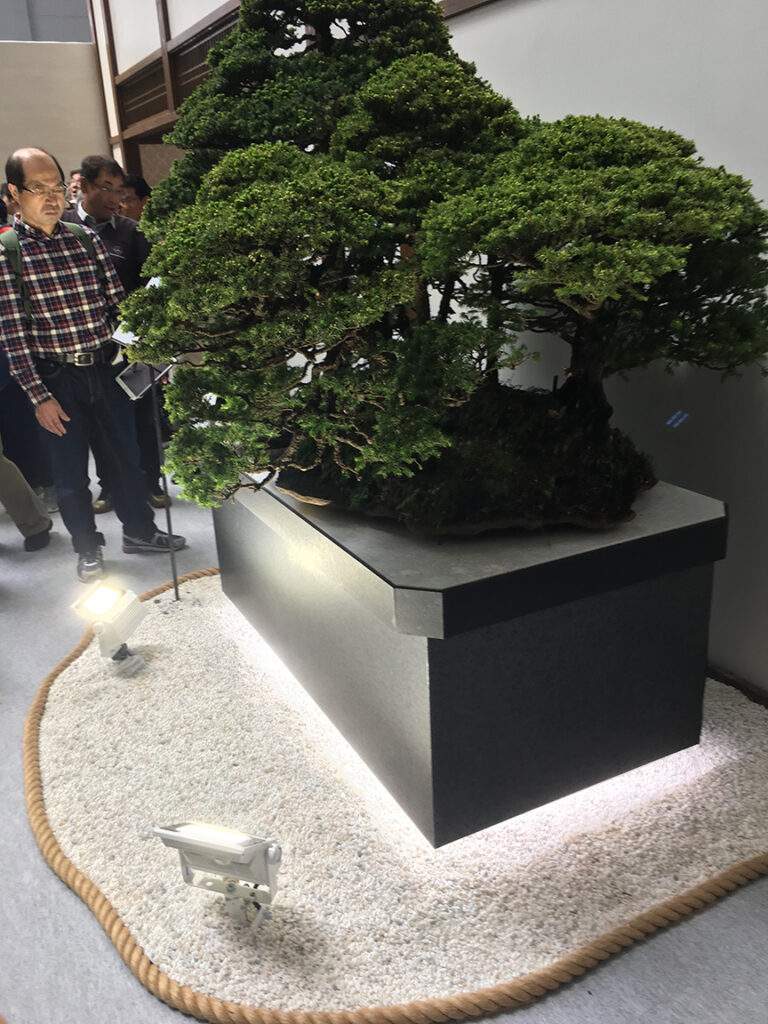
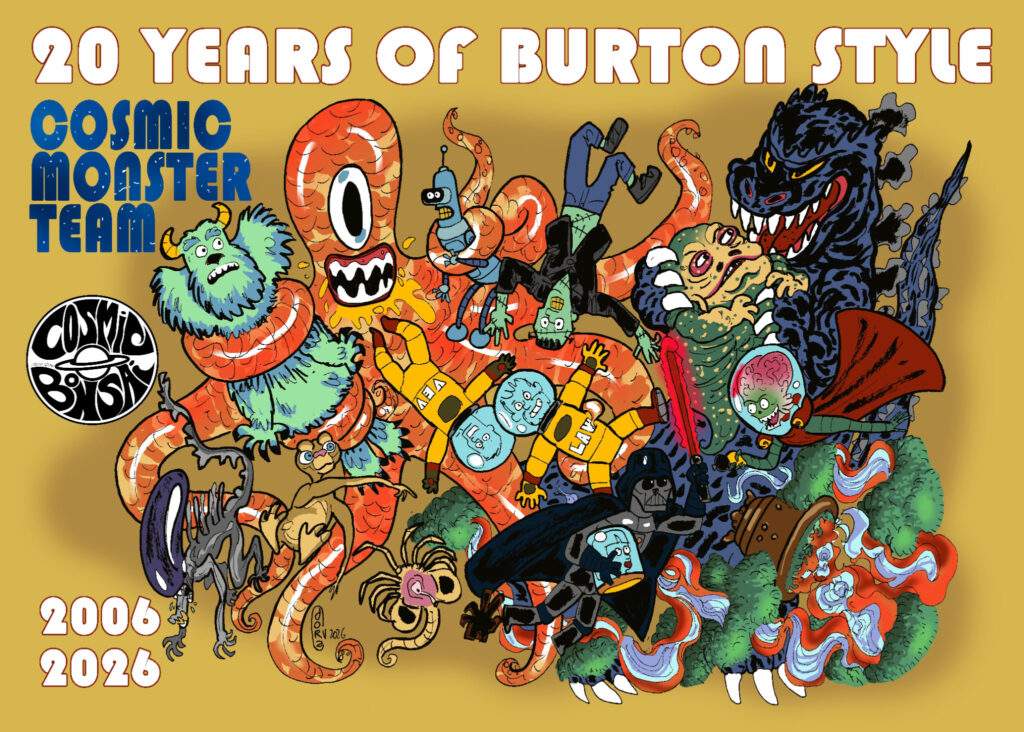
Not all bonsai display in Japan mimics use of a niche. Consider this display at a major Japanese exhibition.
Art should communicate. Paintings communicate. Sculpture communicates. Music communicates. Why should tree display be different? Instead of asking whether a display follows prescribed conventions, perhaps we should ask whether it evokes wonder, tranquility, tension, joy, loneliness, nostalgia, grief, or hope. The challenge is not merely to present a tree correctly but to create an emotional experience.
From Horticulture to Expression
Bonsai sometimes struggles to evolve artistically because practitioners often approach it primarily as horticulture. Growing healthy trees is essential. Without horticultural skill there can be no bonsai. Yet horticultural excellence alone does not create art. A perfectly healthy tree may still be emotionally uninteresting. Much of bonsai discussion focuses on branch placement, taper, ramification, and technical execution. Far less attention is given to emotional response. Yet viewers rarely remember technical details. They remember how an artwork made them feel.
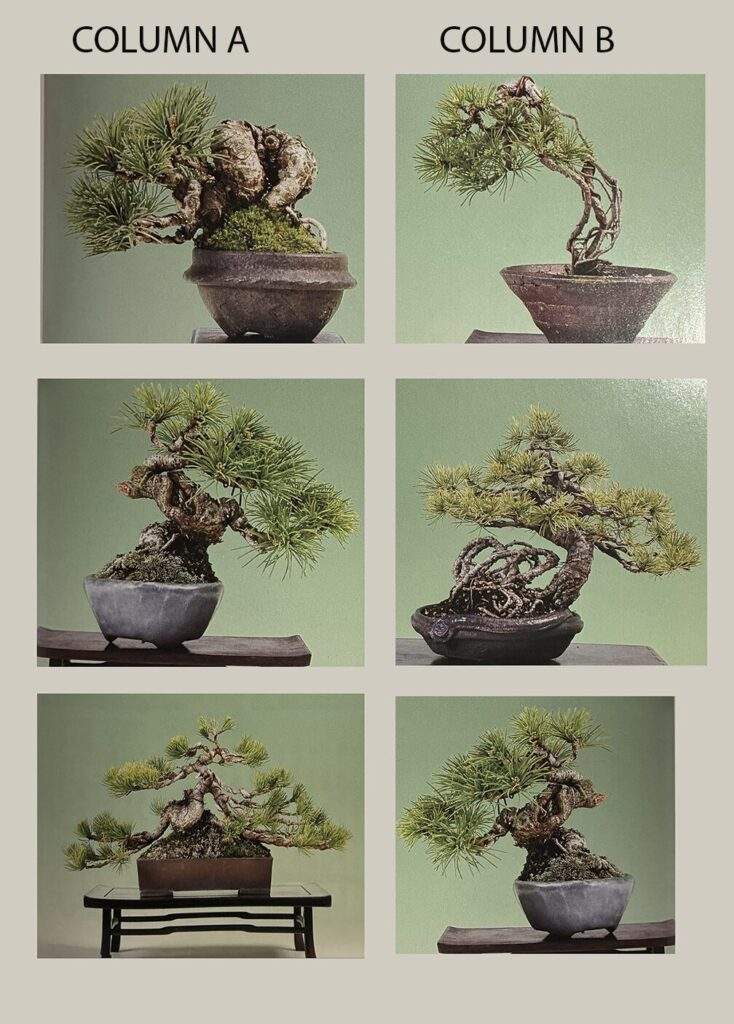
An old juniper may evoke perseverance. A flowering tree may suggest beauty and hope. A deadwood composition may recall pareidolic images. A forest planting may evoke scenes from literature. Creative displays can elicit feelings of trans-dimensional travel among many other concepts. The emotional dimension has the potential to be the most powerful aspect of tree-based art, yet it is frequently overshadowed by technical analysis.
Tree artists should ask deeper questions:
What story does this tree display tell?
What emotion does it evoke?
What memory does it trigger?
What human experience does it represent?
These questions shift the focus from technical compliance to artistic communication.
Why Tree Art?
The phrase “Tree Art” offers several advantages.
First, it is immediately understandable.
Second, it emphasizes art rather than tradition.
Third, it encourages innovation. Artists from diverse backgrounds can participate without feeling obligated to replicate a particular cultural framework.
Finally, it acknowledges that the medium is the tree itself while leaving room for creative freedom. It even frees the art from a typical bonsai container.
Traditional bonsai would remain an important branch of Tree Art, just as realism remains an important branch of painting.
Preserving Tradition While Embracing Change
Renaming bonsai would not require abandoning tradition. Traditional Japanese bonsai remains one of humanity’s great artistic achievements. Its principles and techniques deserve respect and study. The goal is not to reject tradition but to prevent tradition from becoming a cage.
Artists should understand the past without being imprisoned by it. Good painters still study Renaissance masters while creating contemporary art. Successful musicians still study classical composers while exploring new genres. Tree artists can likewise study Japanese bonsai and Chinese penjing while pursuing new directions.
The Japanese bonsaists who advanced bonsai were innovators themselves. Following their example may require creativity rather than imitation.
Tree Art Is Already Here
Whether bonsai should actually be renamed is less important than the conversation the question inspires. The word bonsai carries history, beauty, and cultural significance. It will undoubtedly remain part of the vocabulary of tree cultivation for generations to come. Yet the discussion highlights an important challenge facing the modern tree artists.
Artists must decide whether the future lies primarily in preserving inherited rules or expanding artistic possibilities. Looking exclusively to Japan is historically inaccurate, culturally limiting, and artistically restrictive. Bonsai began in China, evolved in Japan, and now belongs to the world. No single culture has a monopoly on its future.
If terms such as Tree Art encourage artists to think beyond convention, communicate more deeply, and explore new creative possibilities, then the discussion itself may prove valuable. The future of the art will be shaped not by those who merely preserve what already exists, but by those willing to imagine what it can become.