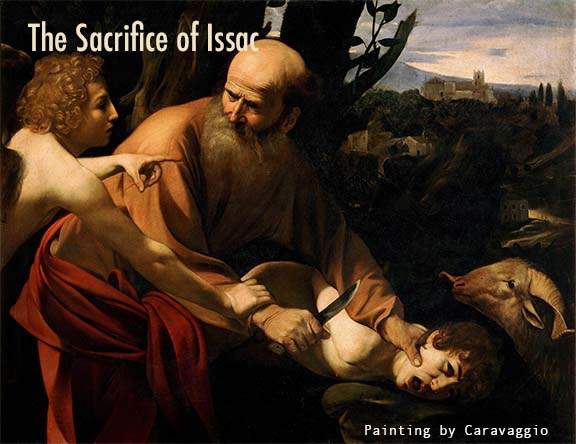
Sacrifice defines the human experience. Throughout history, people have willingly surrendered comfort, wealth, time, safety, and even life itself in pursuit of something greater than themselves. Parents scrimp and save for their children. Soldiers endure physical and emotional hardship for their country. Even in nature, renewal often begins with loss: forest fires destroy mature trees, allowing sunlight to reach the forest floor; storms break branches, stimulating new growth. Nearly every worthwhile achievement requires giving up something of value in exchange for something of even greater value.
Bonsai is no exception. Perhaps more than many art forms, bonsai is built upon sacrifice because it demands something from both the artist and the tree. Unlike painting or sculpture, bonsai is a partnership with a living organism. The artist cannot simply impose a vision upon the medium. Instead, artist and tree spend years—sometimes decades—working together toward a common goal.
The Artist’s Sacrifice
Creating exceptional bonsai requires far more than occasional watering and pruning. A mature bonsai often represents thousands of hours of work spread over decades. The artist sacrifices weekends, evenings, vacations, and financial resources in pursuit of a vision that may never be fully realized. Wiring, pruning, and styling demand concentration and patience at the expense of other endeavors.
Perhaps the greatest sacrifice is time itself. Modern society values immediate gratification, but bonsai follows only the rhythm of nature. A trunk may require decades to mature to phase 4. A branch may need years before it is ready to occupy its final position. Fine ramification develops one growing season at a time. The bonsai artist willingly exchanges immediate satisfaction for lasting excellence.
There is no such thing as instant bonsai
The Tree’s Sacrifice
The tree also contributes to the artistic process. Every refined bonsai has surrendered branches, roots, bark, and foliage. It has sustained pruning, wiring, carving, grafting, repotting, and countless other interventions that redirect its natural growth toward an artistic vision.
Remarkably, trees possess an extraordinary ability to survive hardship. They compartmentalize damage, redirect energy, and continue growing. Rather than resisting change, they adapt. This remarkable resilience makes bonsai possible.
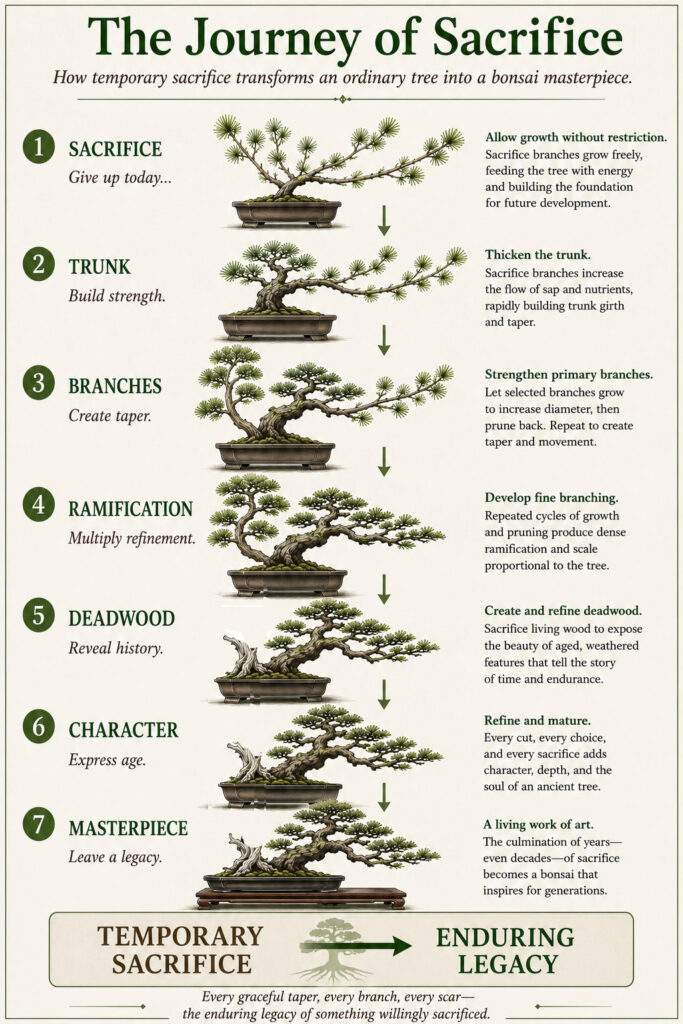
Nowhere is this more evident than in the use of sacrifice branches. The name itself reveals their purpose. A sacrifice branch grows intentionally with the understanding that eventually a pruning snip removes it. Its value lies not in its permanent appearance but in the benefits it provides while it remains. Its contribution ends. Its legacy endures. Figures 1 and 2 illustrate their benefit when used as a process.
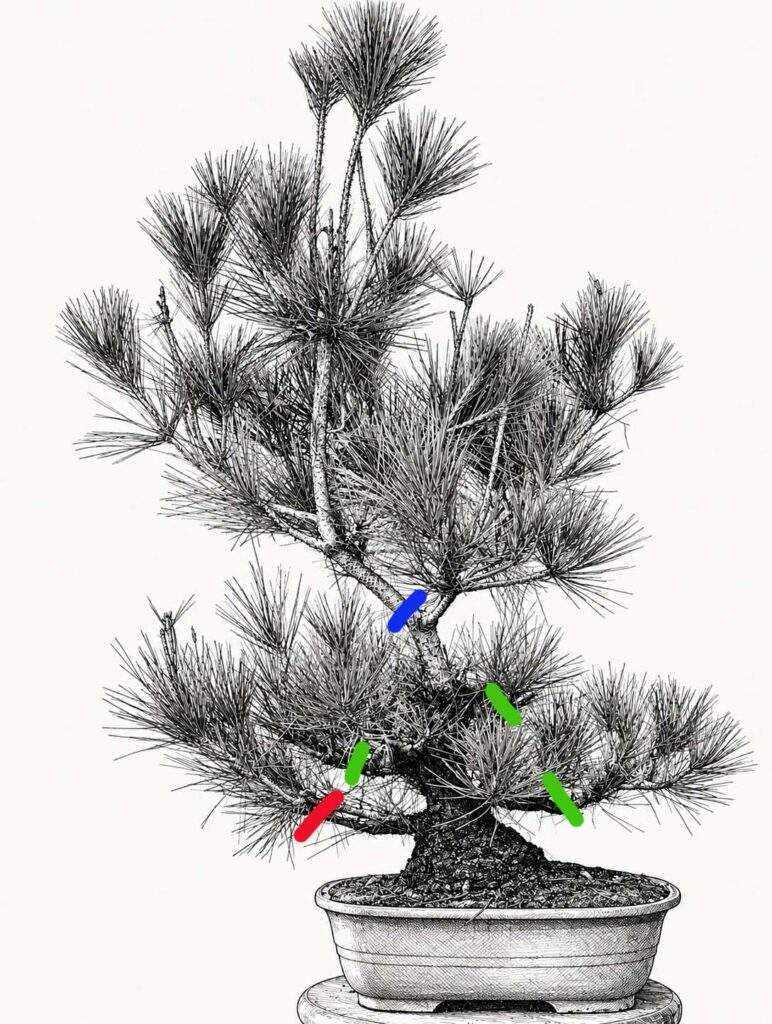
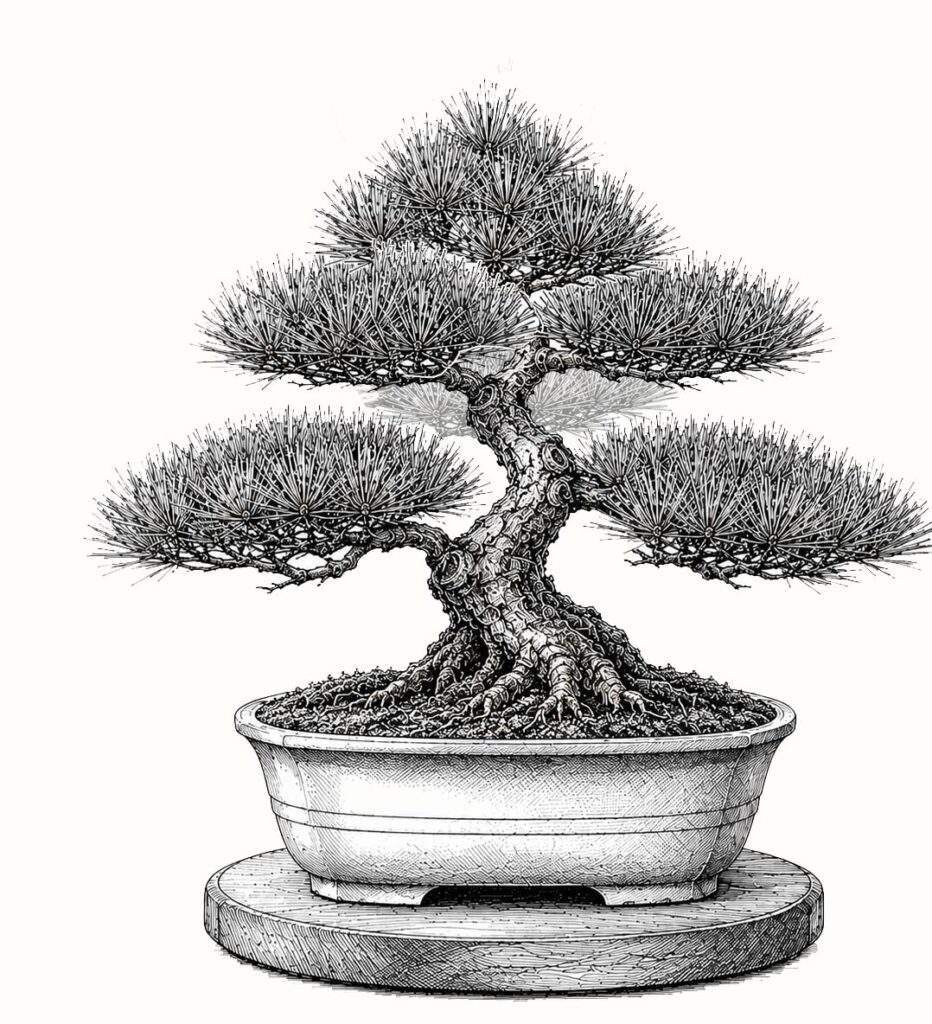
Sacrifice for Trunk Development
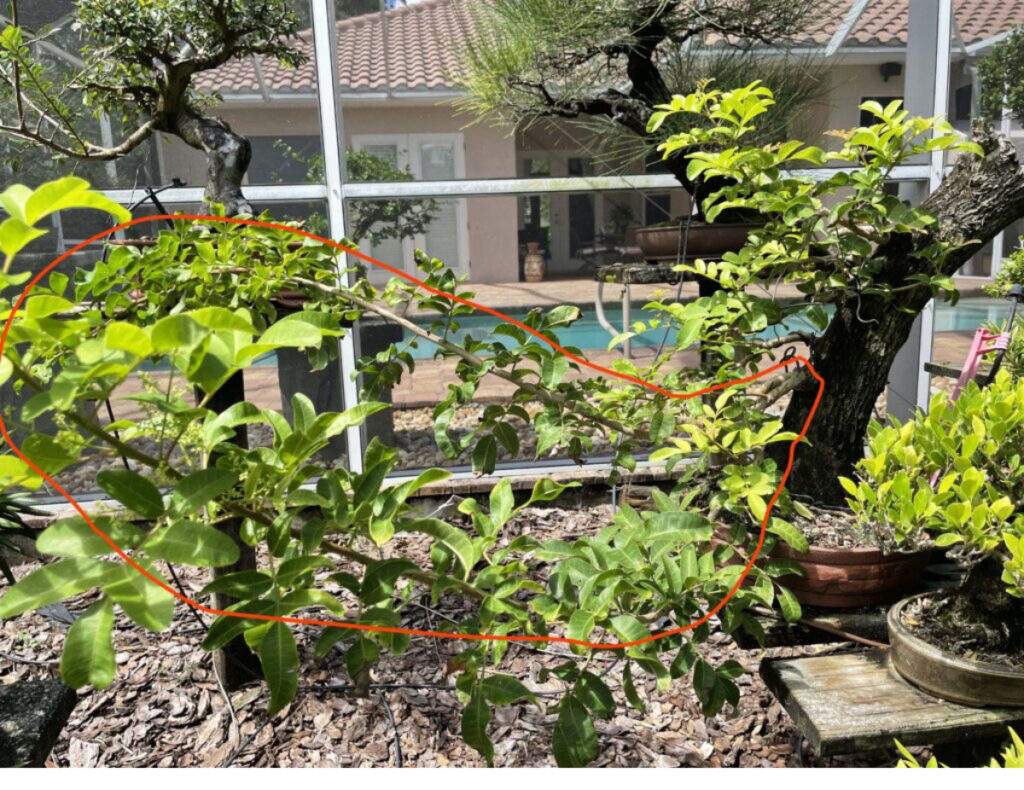
One of the most important uses of sacrifice branches is trunk development. Young trees naturally possess slender trunks that lack the strength and visual authority of mature specimens. Allowing a sacrifice branch to grow freely creates a powerful engine of photosynthesis. The increased flow of nutrients stimulates rapid growth, causing the trunk to thicken much faster than careful pruning alone.
The sacrifice branch often grows oversized and completely out of scale with the finished design. The artist deliberately accepts that imbalance, trading temporary imperfection for permanent improvement. See figure 3.
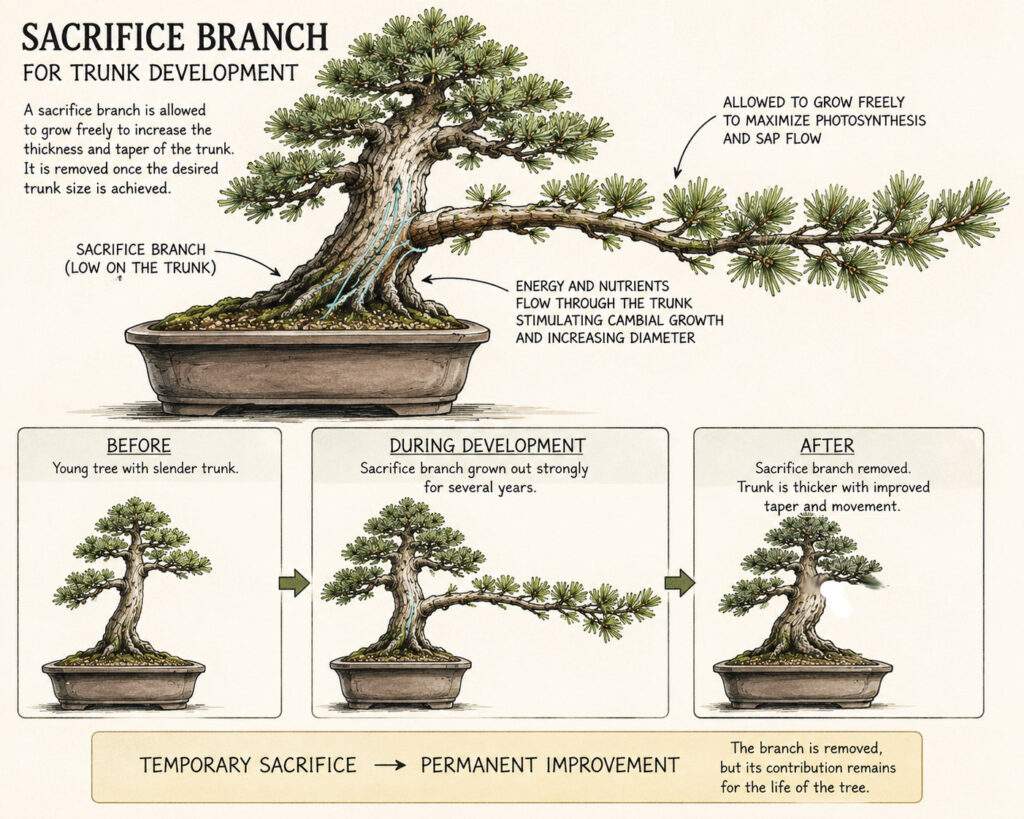
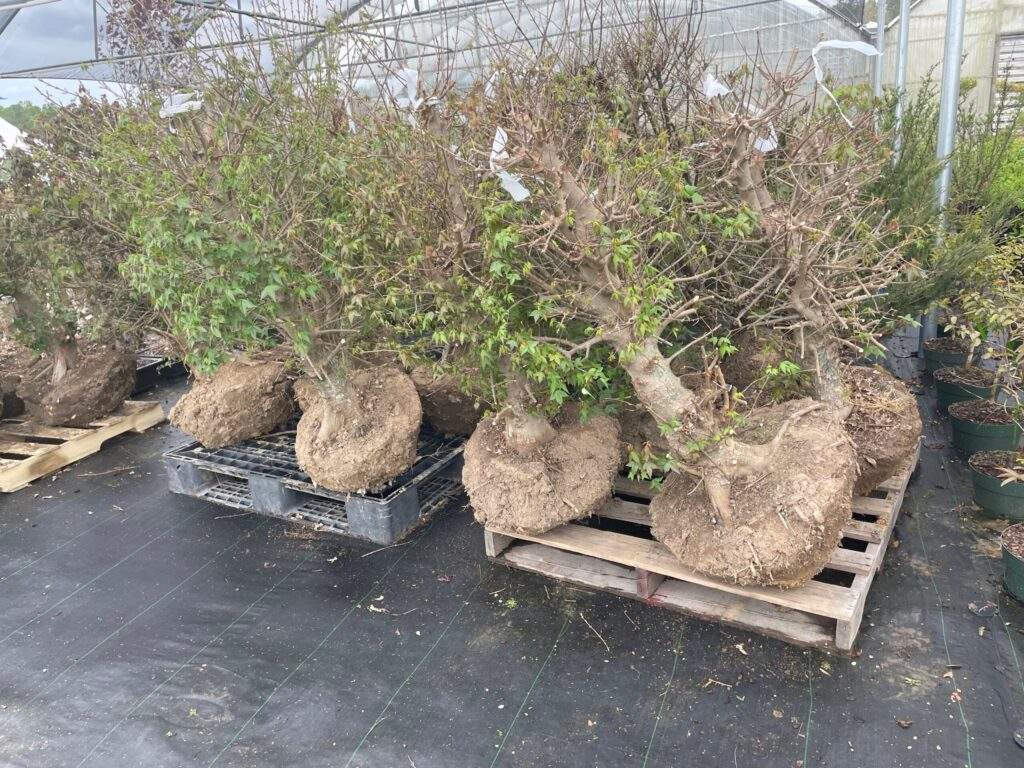
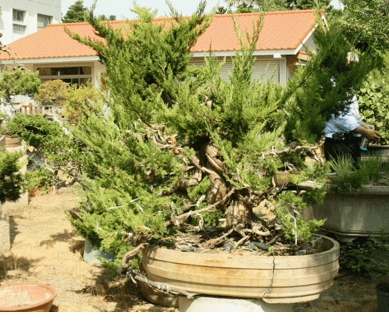
Once the trunk has reached the desired proportions, the sacrifice branch is removed. Although the branch disappears, its contribution remains permanently recorded in the trunk. Perhaps the ultimate sacrifice branch is the trunk itself. Field-grown material (see Figure 4) often grows unchecked for years before a trunk chop removes most of the tree, leaving only the lower portion to begin the next stage of development.
Sacrifice for Branch Thickening
The same principle applies to individual branches. Well-proportioned bonsai require branches that gradually taper from the trunk outward. When a branch lacks sufficient thickness, letting it grow freely beyond the future silhouette of the tree creates additional foliage. The increased sap flow accelerates branch development.
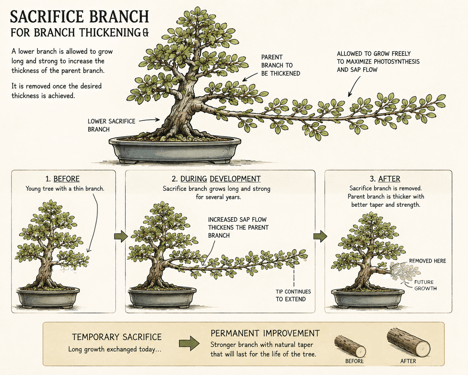
After sufficient thickening has occurred, the elongated growth is removed, and new buds then grow. Repeated several times this creates a branch with tapered proportions and strength. Again, temporary growth in exchange for permanent improvement creates excellence.
Sacrifice for Ramification
Sacrifice is not always dramatic. Ramification—the intricate network of progressively finer twigs that defines mature bonsai—come from through repeated cycles of unrestricted growth followed by pruning. Each pruning removes months of development, yet every cut stimulates dormant buds to produce two or more new shoots. Repeating this process year after year creates increasingly finer branch division while simultaneously producing natural taper from one segment of the branch to the next.
These two aspects of sacrifice pruning produce slightly shorter and finer branches than the one before it, with the elegant taper characteristic of old trees in nature and dense ramification.
Fine ramification and graceful branch taper appears one sacrifice at a time.
A Word About Scars
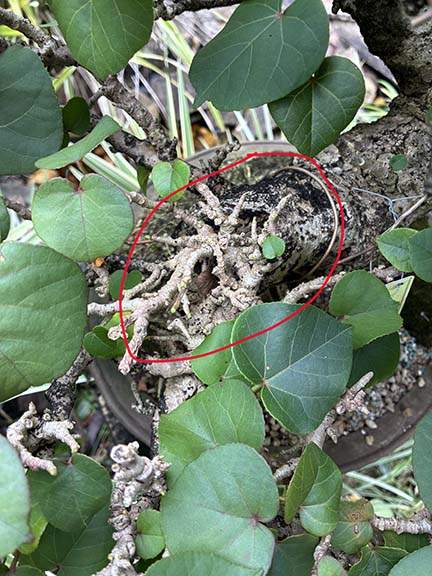
One inevitable consequence of using sacrifice branches is the scar left behind when upon removal. Fortunately, the bonsai artist has several options for dealing with these scars.
Hide the scar. If your goal is to minimize its visibility, position sacrifice branches toward the back of the tree whenever possible. The scar will be less conspicuous from the primary viewing angle. Encouraging new buds to develop adjacent to the wound can also accelerate callus formation and help the scar blend into the surrounding bark over time. In some cases you can bend new shoots with wire over the scars to hide them as the shoots grow. Figure 8 shows how branching applied to a Sea Hibiscus (Taliparti tiliaceum) it difficult to see the scar.
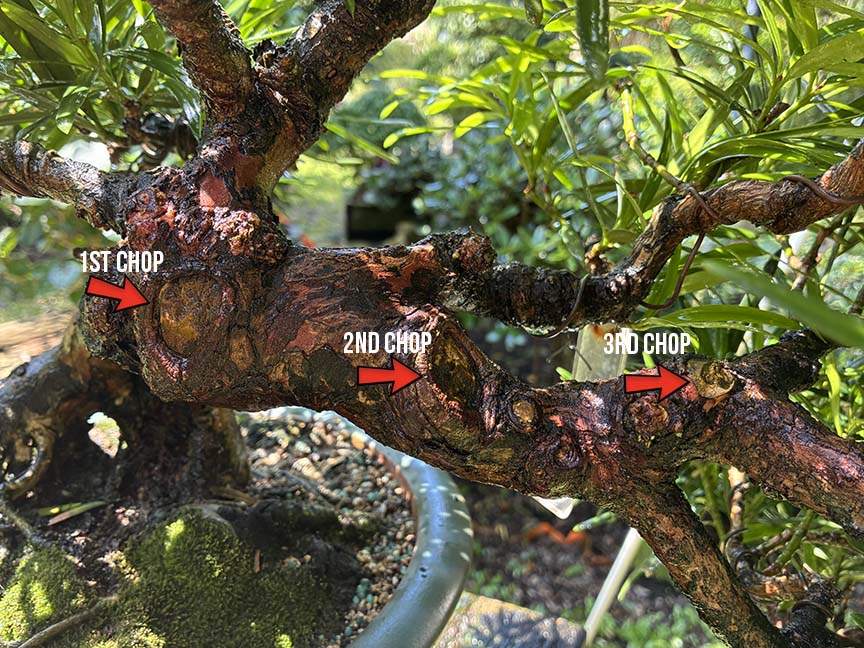
Manage scar size. Instead of allowing one sacrifice branch to become excessively large, use a series of sequential sacrifice branches. Remove each branch before it creates an oversized wound, then allow a new sacrifice branch to continue the thickening process. This approach achieves the desired development while keeping scars smaller and easier to heal. As an added benefit, the removed sacrifice branches can often be air-layered or propagated from cuttings, creating new bonsai material. Figure 9 shows how I developed trunk grit with sequential sacrifice branches. Each sacrifice branch reached about 9 feet long before removal. These scars will eventually heal over but I like damage on trees – it tells a story.
Embrace the scar. A scar does not have to be hidden—it can become an important design element. Scars tell the story of adversity, recovery, and resilience. Rather than viewing them as flaws, consider making them features of the composition. Repeated scars can even establish a subtle visual rhythm that reinforces the tree’s history and character.
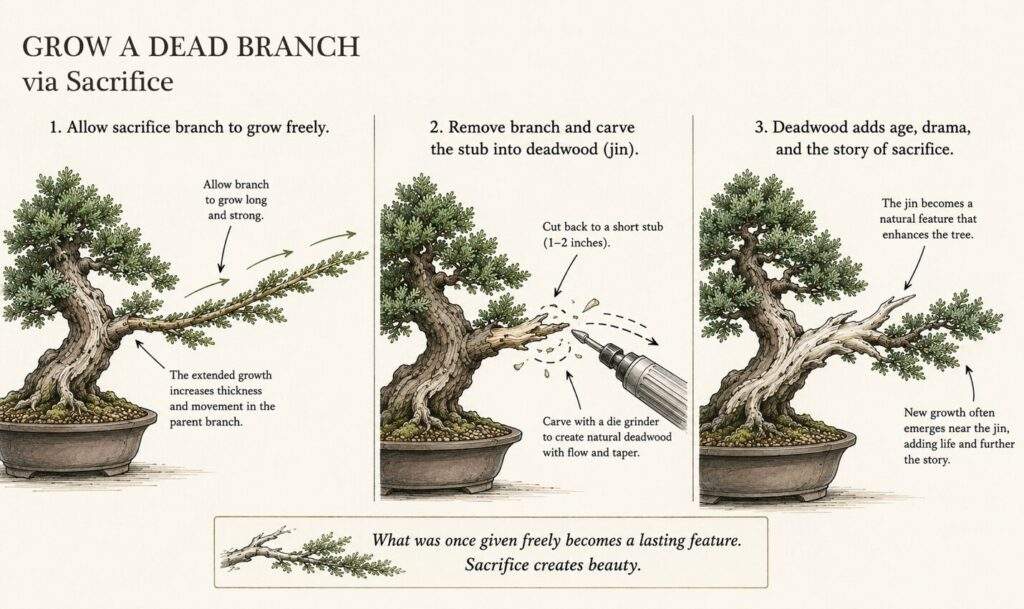
Transform the sacrifice into deadwood. Perhaps the most philosophical form of sacrifice is the creation of deadwood. See Figure 10. In nature, lightning, storms, drought, insects, and age leave scars that become part of a tree’s history. Bonsai artists sometimes recreate this history by intentionally sacrificing portions of living tissue. A branch may become a dead branch. A strip of bark may be removed to create a linear surface scar. Living wood is surrendered so the tree conveys greater age, hardship, and endurance. Paradoxically, carefully created deadwood often strengthens the illusion of life by revealing the story of survival.
The Ultimate Reward
Every great bonsai reflects thousands of sacrifices. The artist sacrifices time, energy, resources, and thought. The tree sacrifices branches, roots, bark, and portions of its structure. Together they create something neither could achieve alone.
Perhaps that is bonsai’s greatest lesson. Sacrifice means more than giving something up. It is the deliberate exchange of something good for something better. Temporary loss becomes a long-term investment, and each sacrifice contributes to the creation of a living work of art whose beauty is measured not only by its appearance, but by the years of dedication that made it possible.
In the end, nearly every graceful taper in a bonsai—whether in the trunk, the branches, or the finest twigs—stands as the enduring legacy of something willingly sacrificed.